
Neighbourhood health infrastructure’s strongest foundation isn't concrete. It's conversation. (PART 1)
This is Part 1. You can find Part 2 here.
We’re standing at a crossroads in health infrastructure.
Do we keep managing buildings, or do we focus on strengthening the connections between people, services, and communities?
Can we do both at once?
How should these strategies link to neighbourhood health centres, and how do we make prevention part of everyday practice?
I believe the strongest foundations for neighbourhood health aren’t made of concrete - they’re built on conversation, collaboration, and connection. I also believe that long-term infrastructure success won’t be measured in square metres or capital spend, but by the quality of the relationships that connect people, services, spaces and places.
Beyond buildings
We talk about estates strategies, investment pipelines, and building programmes. Systems may be at different stages of delivery maturity, but strategically they usually know the rough numbers - how much capital we need, where new hubs should go, their shape, and approximate clinical capacity.
And make no mistake - getting neighbourhood health centre investment right and ensuring systems are delivery-ready is non-negotiable, (and a core part of our work!).
But let’s pause.
The real work of transformation doesn’t stop at the walls of a health centre or hub.
In fact, those walls can limit us if we don’t step back and see the bigger picture.
We need to remember that health infrastructure isn’t just physical. It’s a living ecosystem of people, relationships, and resources - operating at system, local, neighbourhood, and street level. It depends as much on trust, influence, and communication as it does on capital investment.
It requires understanding of place, people and space - and how they all interact.
Taking an ecosystem approach complements the work around neighbourhood health centres. Because when infrastructure, relationships, and services work together, we can move from ‘delivery-ready buildings’ to ‘delivery-ready neighbourhoods’ that begin to truly enable health, prevention, and connection.
The spaces between
At a neighbourhood level, we can’t afford to be blinkered. Health doesn’t just happen in hospitals, hubs or health centres.
It happens in the spaces between.
And the future of neighbourhood health won’t be defined by how many singular health centres we build, but by how well we link what already exists.
Rethinking a ‘neighbourhood’
We throw the word ‘neighbourhood’ around in estates and infrastructure circles.
But what do we mean?
A postcode?
A circle on a map?
A health centre?
The Cambridge Dictionary defines it as ‘the area of a town that surrounds someone's home, or the people who live in this area.’
Simple. But neighbourhoods are more than postcodes. They’re networks of people, services, streets, parks, schools, and shared spaces.
They are the lived experience of connection, and disconnection.
Neighbourhood health centres. Care closer to home. Co-located services. All vital.
But are we really connecting the dots locally across health, housing, transport, energy, green space, social infrastructure, and the NHS estate?
Or are building NHS estates islands instead of bridges?

Looking through a health lens
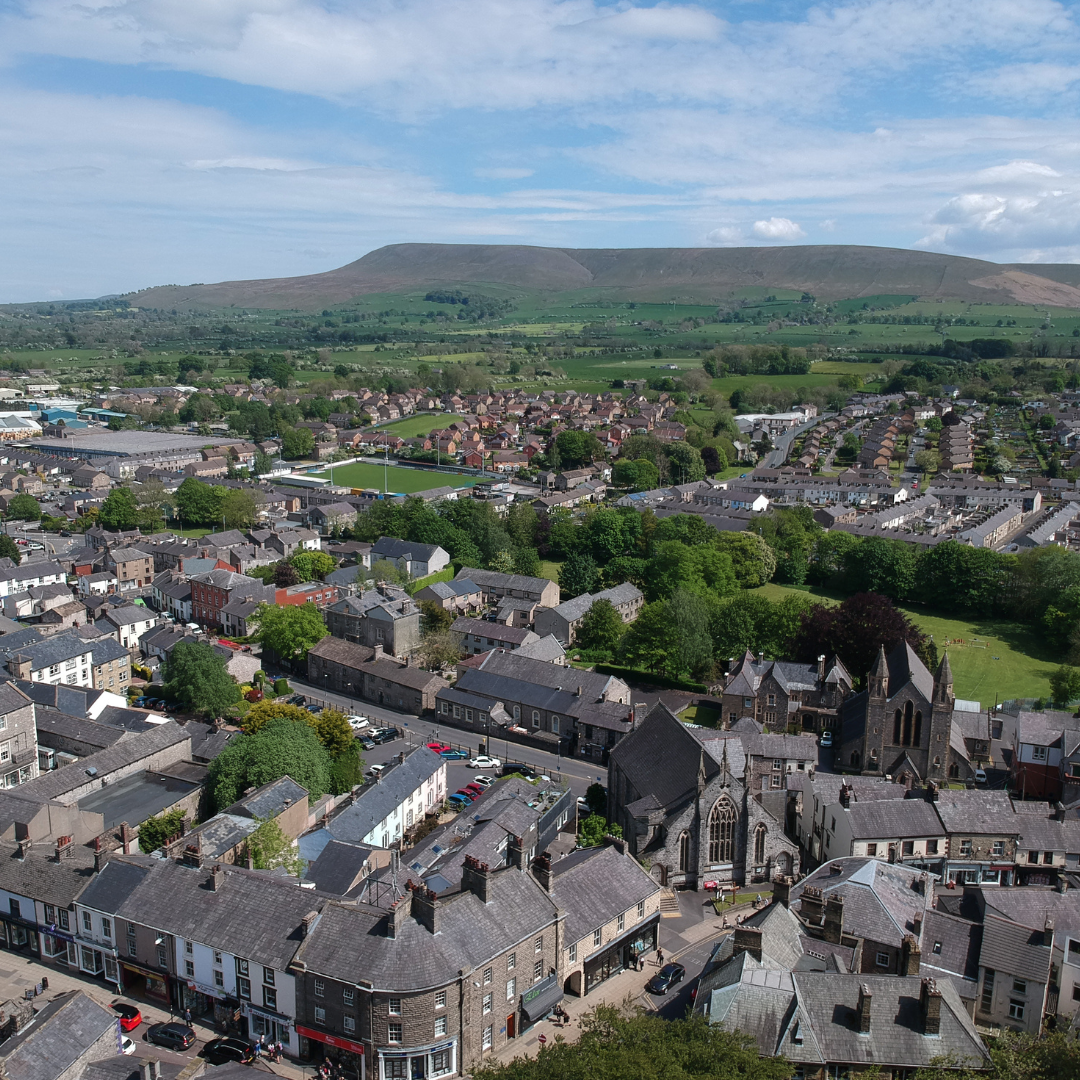
Neighbourhoods aren’t neat lines on a map. They’re messy. Alive. Full of paths, gaps, routes, and invisible networks of connection. Health infrastructure within them is layered, nuanced, and complex.
So a shiny new building doesn’t automatically create a community health hub. Infrastructure isn’t just concrete. It’s physical, social, and digital, and shapes walkability, cohesion, access to care, housing quality, and more.
Wider health infrastructure both influences, and is influenced by, the NHS estate.
Some NHS health centres are brilliantly integrated at the heart of neighbourhoods - I can think of many incredible examples. But far more (including many we may build in the future) sit isolated and disconnected. Collaboration is often blocked before it even begins - by invisible walls of contracts, policies, strategy, culture, risk, poor design, or simply not understanding how the neighbourhood ecosystem works.
And that understanding starts with one basic idea - everything is connected.
People. Services. Infrastructure. All of it.
And the NHS estate? A critical part of that network. It can unlock collaboration and access, or it can reinforce isolation.
So, what does a connected healthy neighbourhood ‘hub’ look like?
A connected neighbourhood health hub isn’t just a building - and sometimes it might not be a building at all.
It could be multiple points in a neighbourhood where people, services, and infrastructure naturally intersect.
A new NHS neighbourhood health centre may not end up as a hub ‘at the heart of the community’, despite what the NHS business cases say, or the national programme intends. A new NHS neighbourhood health centre may be the primary hub in one area, or a secondary junction in another.
Either can work.
Context is everything. A neighbourhood health centre isn’t automatically a community ‘hub’.
Good design isn’t about forcing new buildings into a place with functions that don’t fit. It’s about understanding the network, connecting the dots, and amplifying impact.
NHS buildings plug into the neighbourhood and community network - they don’t create it. A health centre should be viewed as a junction where activity naturally converges, often focused around treatment and care delivery. Its wider role depends on how the local ecosystem is already connected.
So before we start drawing walls or planning layouts, we need to observe where these intersections already occur. Real hubs work best when they align with the flows of the neighbourhood and complement existing connections. Sometimes a site already exists - in those cases, we need to work with what we have, not against it.
Every layout, pathway, and connection should reduce friction, focus on prevention, lower the need for intervention, and help the system flow - not just inside the hub, but across the wider neighbourhood.
So what?
If we want neighbourhood health infrastructure that actually works, we need to look beyond NHS bricks and square metres. We need to start designing for the connections that already exist - and the ones we want to grow.
That’s where the real transformation happens.
Understanding the neighbourhood is just the first step. The next challenge is aligning and connecting these ecosystems across geographies and sectors.
More on that in our next blog.