Freelance Artist, Creative Facilitator and LA1 Shorts Director
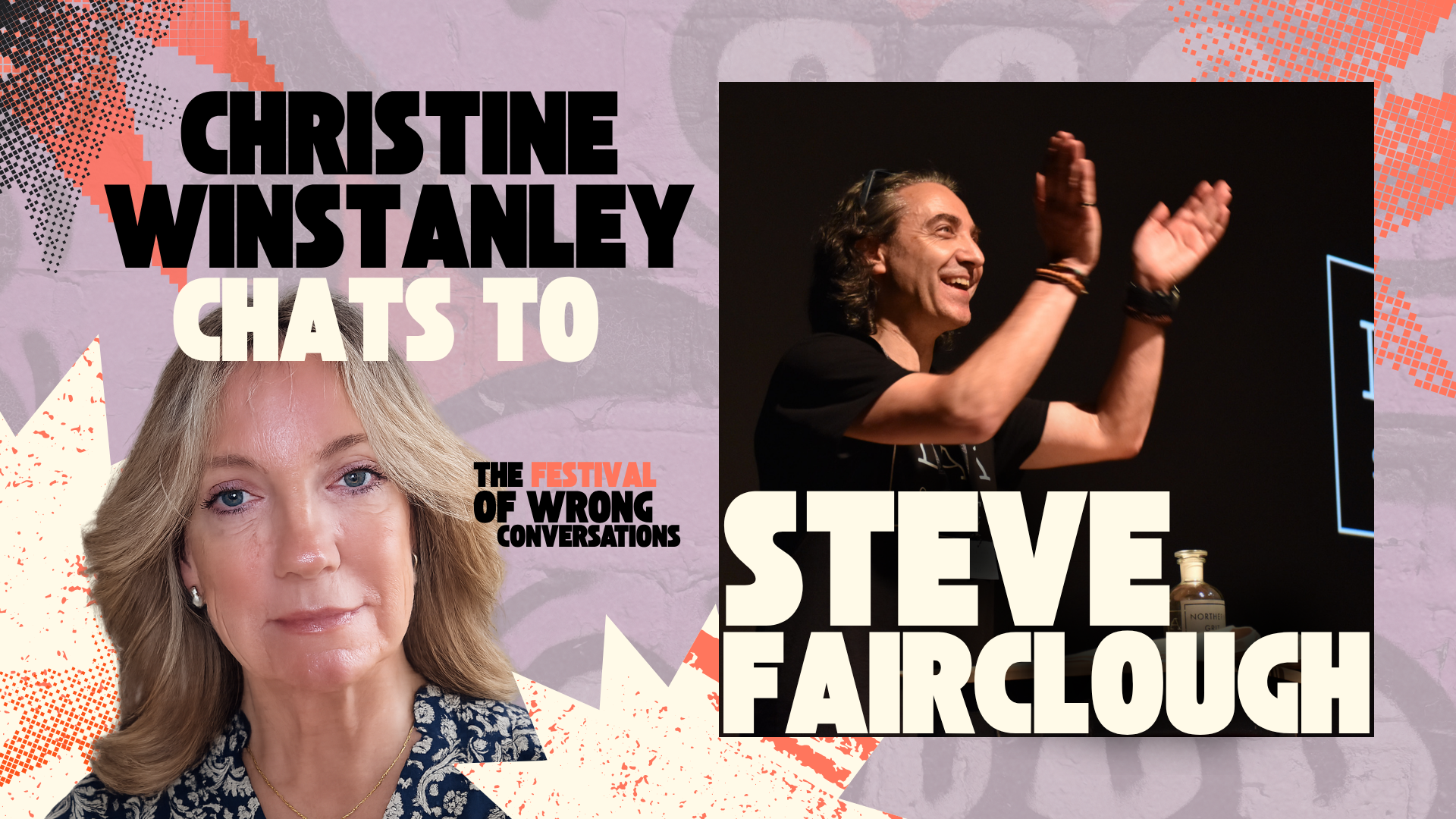
Today, I sat down with artist, creative facilitator and LA1 Shorts director Steve Fairclough.
We talk about what happens when you give people permission to play, why a room changes simply because of the people in it, and how creativity can open doors that formal interventions sometimes struggle to reach. Steve also gets us thinking about what happens when we start seeing art as a way of connecting people to themselves, to each other and to the places they live.
There are some bigger questions here – social, structural, generational, and Steve has a brilliant way of connecting them. More importantly, he poses a question back to us all, and asks, ‘do artists, communities and people who use places everyday have something to teach the health system?’.
We wander, in the best possible way, but come back to, the most important thing we can do is ask a completely different question – this is where the most interesting conversations begin.
The longer read
(Grab yourself a coffee…or a drink of your choice)
Not enough time? Find a snapshot of our conversation here
Christine: Hello, Steve and welcome to the Festival of Wrong Conversations.
Steve: Hi
Christine: Thank you very much for agreeing to take part.
Could you start by telling us your name, what you do, and why a conversation about health infrastructure matters personally to you. And then in three honest words, capture what it is you do?
Steve: Okay. I'm Steve Fairclough. I'm a performing and creative arts freelancer. I’ve worked broadly across the arts for nearly 30 years, and these days I mainly workaround arts facilitation, creative engagement, film, and oral history. I love working with people, particularly people from local communities who don’t often have creative opportunities.
Art is for everyone; it’s in us all. We're all different types of creative artists, working with different ideas and on different levels. I don’t mind what level you feel you are at as long as you are participating, creating and enjoying the process. I've seen the impact that creativity can have on people within the health sector through work with disability arts groups, young people dealing with mental health issues, and dementia arts, which I did for almost 10 years. Also working with Lancaster University at their health innovation campus where we screen health and well-being films and documentaries.
Community arts events almost always put at least one participant back in touch with something that they used to do and hopefully reignites their interest again. There's always something; calming, energetic, and individual within group participation, I love all the connectivity.
The three words that you asked for, I found this quite challenging, so I've ended up with communicate, collaborate, cooperate, or connect, create, and champion.
They're my offerings.
Christine: That's fantastic.
I think you touched on a really good point here around art. As you get older you don't really have permission to play, but the minute you start doodling, whether you just pick up a pencil and start scribbling, your mind just goes into a completely different place, doesn't it? But we just don’t feel like we have permission. Especially if we think we're going to be judged. I’m definitely not an artist, but I can spend hours just doodling and get lost in the now.
Steve: I agree with that and I think in the sort of creative engagement activities that I deliver or facilitate, I'll go right across the board of creative activities.
So, in 30 years, I could pretty much tick every creative box. There isn’t anything that I haven't had a go at in one way, shape, or form. I'm a real advocate for arts. So, if I'm sitting in a room with 20 other people and none of them have ever sketched before, and they're all really nervous, I'm the one that's not nervous. So, I'm more than happy to sketch in whatever way, and whatever it comes out like is fine. And because I'm willing to share that, it opens the door for the other people in the space to be less worried and more curious.
It's the same with creative writing activities as well. I open the door and say ‘it's okay to get things wrong. It's okay to be unsure. It's okay to not know how to spell’. Some people don’t have the right grammar or have the right pencils or paper to draw with, but it doesn't matter.
As long as you're doing it, I think that's the real opportunity not to be missed.
Christine: That's lovely. I feel inspired now just to draw.
What does a healthy space mean to you?
Christine: Now moving on, what does a healthy space mean to you? And have you ever actually been in one? And if you have, can you tell me about it?
Steve: Yeah, I'll try. So, I think I've been in healthy spaces in arts projects, and in unhealthy spaces, that can change to a healthy space by the personalities of the people in the room.
So you might be in a room that you think is a bit dull, or a bit dark - not the right sort of space for the activity you're doing. But as a facilitator or as a group of participants, if you've got the right attitude, if you've got the right mental approach in that moment, you can change that space with positivity. I think that's key. And that goes back to my thing about ‘it's all about people’. It's all about your approach and your attitude. For example, curating the space, seating, colours, lighting, putting plants, flowers in, selecting the right activities for the right people to create a no pressure environment.
Also understanding that freedom of expression is a very individual thing for people. Trust in the people that are around you and allow them space and time to progress in their own way, at their own level and pace. Making sure that they're comfortable and they enjoy the activity. I think all those things are really important.
What I would say about an occasion where this approach was used, was in Clifton Hospital in Lytham. There were four artists, all with different but complimenting skills, and we went to work with some long-term care patients in a ward. Basically, over a few months, we chatted to them, interviewed them, recorded their stories, wrote poems about them, offered some creative making classes - we took in books, music, plants, and we created a workbench on wheels that would stay in that environment and people could come and take different art materials, or a book. There were bird books, nature books, binoculars as well, craft ideas, art materials, everything you could think of to keep your mind active, there was something on that trolley that people could access.
It was a brilliant, project that again, created a whole ‘no pressure environment’. The staff were getting involved as well, which was superb because they understood the trolley and what it had to offer. So, when we weren't there as artists, they were able to negotiate what was available and what their patients were able to use.
As far as I know, it's still there. So, there was talk about continuing and developing the project, but I think inevitably, a lack of funding ended it. It's not easy with demands on finances, time scales and reporting.
Just as an aside, I think the nature and the outdoors can have a huge impact on health and well-being too. Forests, mountains, coastal locations, places where the pace can be a little bit slower. Creative activities are not limited to indoors.
Christine: You've taken me there already!
Steve: Art forms aren't always easy to translate from being in an art room, where you've got your tables and all your equipment, to outside, but there are always ways and means around things, all you need is a sketch pad, note pad and a pencil and off you go. I’ve delivered drama workshops outdoors in heritage locations, photography and creative writing workshops in heritage locations and so, there are opportunities and ways of making the outdoors work or bringing the outdoors in, as we did at the hospital.
Christine: It's interesting because when I was little, I was in the brownies. One day we went on a trip to the seaside, and I made a graveyard out of sand, seaweed and shells. You can take things in nature and create art, because art is what you want it to be, isn’t it?
Steve: 100%. I remember going on Scottish holidays and creating artwork on the beach. We literally took all the seaweed from right on the edge of the shore, pulled it up onto the beach, and created a Celtic knotted piece of artwork. And because there was a cliff above us, we could climb up onto the cliff and look down on it to take great photographs.
But the other thing that we did by creating the artwork, which was amazing and wonderful fun, was, we turned all the seaweed upside down and moved it around, allowing all the seabirds to come in, and making it easier for them to have their lunch - so all these extra little things happen. It's not just in that moment what you do, it's how that brings other interactions, collaborations or unexpected moments. You think about things differently when you work creatively, you go away from experiences with a different mindset. You're looking for art and artistic imagery as you're walking down the street.
Christine: Yes. In everything.
I really love that story. You created a piece of artwork, and it created renewal. And then something else happened as a consequence, that you couldn't have ever imagined. So, you engage in something; you've no idea what that sparks, or what that triggers.
It's just the magic of life, isn't it?
Steve: Absolutely. Yeah.
Christine: That's great. Thank you so much for that.
What should we stop doing today, for better health in the future?
Christine: Okay, if we're going to build a genuinely healthy society by 2040, what is the one thing we must completely stop doing today? Not something we could reduce, not that's due to be renewed. What should we stop doing?
Steve: Yeah, it at this point when I realise these questions are really deep and hard to answer. But I’ll go for it.
So, there are many, but not all easy to change…
I didn't come into my job to make money. I did it because I thought I could make a difference to people, and because it fulfilled my creative passions. But even the arts have changed and the way some areas of government and education dismisses the arts is appalling.
The work I do has become much more difficult to sustain, and I have to juggle so many projects to simply survive.
It's a struggle.
I come from a working-class background that I'm proud of, but I see how easily people can give up due to burn out from the normalisation of working crazy hours or just not being able to switch off. I think we should end the glorification of busy. Cut it out completely. You know, people need time to go off and do their own things. We should end the fat cat businesses and pay structures that see bankers and businessmen making millions, billions and not giving back. The whole wage structure around who does what jobs is wrong. The millions and billions that some people sit on could make huge changes for good around the globe. Taxation needs to be changed to allow everyone a fighting chance. Wherever your business sits, there should be more specific levels of the total tax you should be paying, and it should reflect the job and impact you make. Tax the energy and communication fat cats who earn huge bonuses while they don’t listen to customers issues and don’t care about the level of service they provide. They’ve no idea what the average working person has to cope with. I don’t even earn anywhere near the average household living wage, but I survive, I pay tax.
Sustainability and UK manufacturing should be brought back and held to a better standard. Making money for a small select few whilst others barely survive isn’t sustainable, it isn’t a fair society that we live in. Stop all smoking related products right now, cigarettes and vapes. Stop all blood sports right now. Stop any single use plastics. Stop sewage and toxic waste dumping immediately. Stop gambling advertisements. They all need to go.
Stop empty buildings being sat on without use, the owners should have to pay a higher tax rate to keep them unused or uncared for. Councils should be able to bring these buildings and dwellings back into use with less red tape to provide rooms and homes for people on the streets. Beautiful old buildings are going to ruin sitting they're empty. I would also say the same about brand new office buildings and out of town warehouses being built without a buyer or genuine purpose. New but white elephants sat there for no reason, and no one wanted them in the first place. Lots of council planning is so wrong, people can’t afford places to live, rents and mortgages are so high, is there some synergy, maybe, that something can be done to help people through these large office buildings that sit empty, particularly since Covid.
Stop the use of concrete and tarmac areas, like car parks, without the incorporation of solar panels or green spaces. In Japan they do all these amazing things, like they build car parks that have solar panels above them or cover them in grasses. You know your car is protected against the elements, and there’s something working with the planet. There are all these clever things that you see being done in Scandi/Nordic countries, and Japan or Malaysia, where they are so progressive, and we seem like we're so dated sometimes.
We should maybe get rid of or heavily restrict AI too. It’s clever, but not planet friendly, and a technology advancement that is a little worrying.
Stop all this City of Culture competitive stuff. Share it out. Share the love. Make sure everybody gets an opportunity.
Let’s celebrate the varied communities and cultural differences we have on a bigger scale. I’d prefer it if we could all share, collaborate and work together for a brighter future.
Christine: So that speaks back to where we started – ‘collaboration’.
Steve: I've worked in a number of different Northwest locations over my 30 years and there's always lots and lots of people doing the same things, but they don't talk to each other. And if they did talk to each other, could they make one wonderful thing that is much bigger and more sustainable, rather than everybody battling around for a few thousand pounds here and a few thousand pounds there?
I do think we are at a stage on this planet where we need to talk more, we need to collaborate more, we need to share.
Christine: Wow, lots to consider there.
Who would you love to hand a budget to, to design a space for ‘health’?
Christine: Okay. If you could hand a chunk of budget to someone completely outside the health system to do something with a space, who would you hand it to and what would you want them to do with it?
Steve: I’d like to think that maybe I would be a good recipient of that money and share it on a national project to promote arts for all, but perhaps you would need a bigger thinker than me.
So, I ended up with a shorter answer, and it's literally a sentence - ‘Create opportunity for socially engaged practice and ways to tackle antisocial behaviour’. I think all I would add to that is, my love of people and community, and I do what I do because I see how it changes and impacts people.
I’ll give you an example – initially at Uni, I just wanted to be an actor, maybe become a household name, but working professionally, things changed. I directed a community theatre show with a bunch of people who were all over 50, connected to Age UK. I was in my mid 20s. Some had done some amateur theatre, but most of them had never acted before.
I ran a 10-week drama workshop to teach them some skills. We wrote them a script, and they did a performance - and they were incredible! I sat at the back of the auditorium and watched the show. And when they all took their bow at the end, something happened inside me, a warmth, a joy, a passion. The pride and the emotion that I saw in those faces changed my direction forever.
So, the majority of my work since then is focused on providing or creating opportunities for others. Particularly people who've never had those arts opportunities before, or who didn't see that the arts could be something for them. I like to try to lift others up.
Christine: You said you didn't have a very good answer for that, but you managed to articulate that well.
What can the health infrastructure system learn from storytellers, artists and the communities that live in the places ‘health’ works in?
Christine: This question might be one you're a bit more comfortable with then. In your experience, what do artists, storytellers, and communities know about places that the infrastructure system fails to take on board, and have you seen any patterns of behaviour linked to this?
Steve: I believe artists, who are invested in a place, understand the people and the histories, the stories and the deep underlying traits of feeling, much more than any government infrastructure could measure. As a northerner, I'm a warm character and I've worked in numerous places around the northern counties. I think some places are naturally beautiful, but it's the people that make it.
Churches are beautiful, but if you don't go into the church, it's just a building. It's you, the congregation, that makes it a church. (I’m not particularly religious by the way).
In the same vein, it could be a gig.
It could be a play.
It could be a cinema. A cinema is not a cinema unless you've filled it with people watching.
Same thing.
Artists are explorers. Artists shine light into dark corners if they're given the chance. We want to find out more than what's ordinarily visible.
We ask the awkward, and the challenging questions. We can infiltrate communities and plant positive seeds of change. We invest ourselves into different circles, invite others in, and as we offer them things to explore with us, they change, we change. We create time, space, and nurture opportunities of connection to support others.
The art form doesn't matter. It's a tool.
We feel their emotions through their stories because art is emotional. We make space for people to think differently, and in turn, the people we meet, projects we create or participate in, they leave marks and memories on us. There is much more meaning and attachment to place, spaces, and buildings than infrastructure believes. Progress doesn't always lead to improvement. We mustn't play with people's lives too much, as we can destroy memory and heritage.
Places and art need to breathe and be understood or challenged.
But progress without truth, understanding and care, is generally just about financial gain for a select few. This must change. Office blocks sit empty where cultural hubs once sat. The public are being cheated out of ever making something of themselves. They keep the small people small, keep the working people down, they just want them to survive, not live.
Christine: Thank you.
Christine: That felt therapeutic for you?
Steve: Yeah. I'm passionate about it all, really passionate.
It's important.
We've just got a new prime minister who hails from the North. I think the jury is out for a lot of people, suggesting there's no substance, that it's all social media covering up the actions, but I think he's got something. I think lack of knowledge is part of the past problems, and lack of connection to the masses - Mr. Burnham at the moment, is telling us what's going on, and showing us what's going on, where he is, why he’s human, and he's in those harder places having the conversations and doing the graft, trying to get the basics right first. Give him time.
I’m a working-class guy, I didn't think I was ever going to go to university, gain a degree and a Masters. I don’t shout about my successes. I still don't feel like I'm ‘clever’ in certain situations or company, but maybe that’s not me, just other egos. With the new government, I do believe there are good things to come.
Christine: That's what we need. Positivity.
How do we manage the clash between the spatial memory of a place and a conflicting vision for its future?
Christine: OK, when a new project is being planned, what happens when the memory of that place conflicts with the professional vision of its future? And in your experience, how does that usually play out?
Steve: Okay. I find this one a challenging one to answer as well.
From my experience, the future vision, for better or worse, is often pushed through. Finance, investment, and targets become the driving force. There are some consultations that take place where historical memories, and relationships to place are taken on board. Even history repeating, where there was once a good thing that was knocked down or taken away, and then councils and planners and builders find themselves discussing how it can be brought back all over again, when they took no notice of public feeling the first time around.
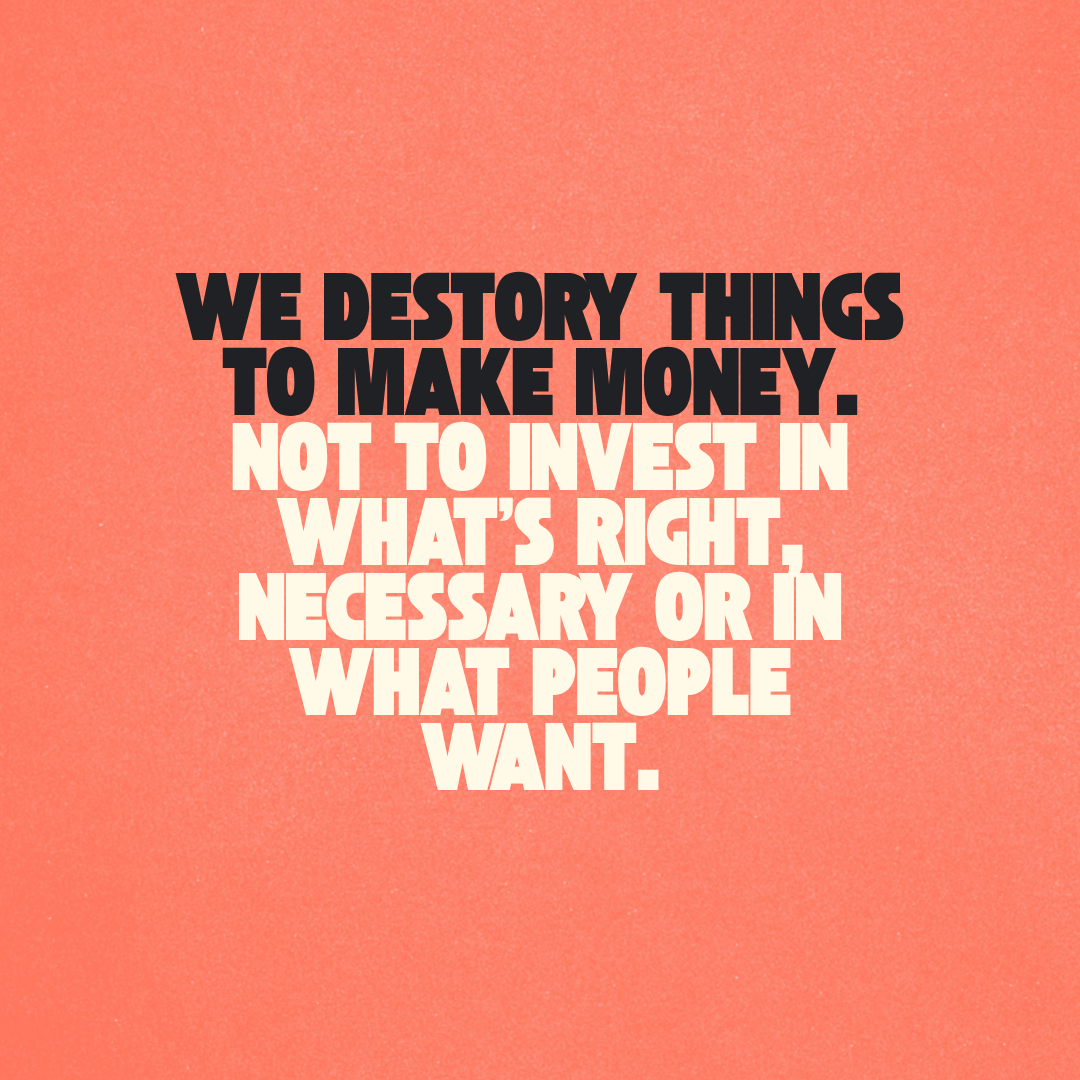
Money is always a factor isn’t it? We destroy things to make money, not to invest in what's right or necessary or what people want. I've heard people in management roles telling people what they should be doing rather than listening to what the issue is and supporting the people on the front line who understand the actual day to day needs.
Sadly, I think some of this still goes on at varying levels. Frontline staff are often only listened to as a last resort or a token gesture - yet they generally have their finger on the pulse. When you're asked to give your thoughts and you’re not listened to, and you start to become disillusioned.
Christine: I'm sure you see that all the time.
Steve: When you've got to try and satisfy questionnaires for large funders say, and you sit there sometimes looking at the questions, thinking; where do I fit, there’s no box for my project or situation. ‘Actually, you're asking the wrong questions. I can't answer you in a way that will give me a fighting chance if you're asking the wrong questions’. Sometimes questions are slanted towards one thing or another, sometimes I ignore call outs because of this.
Christine: Arghh, that’s not great.
You’ve been involved in many notable projects drawing on your experience as a specialist in community heritage, arts, and oral histories. In your opinion, when we ask communities what they want, do we listen? And can you give me an example of where this has influenced an infrastructure project for either better or worse?
Steve: Okay. I think you know that the frontline team would listen. They're in the thick of the conversations. It's whether the feedback is listened to and clearly understood. It's whether it's a financial exercise or an actual trusted working development.
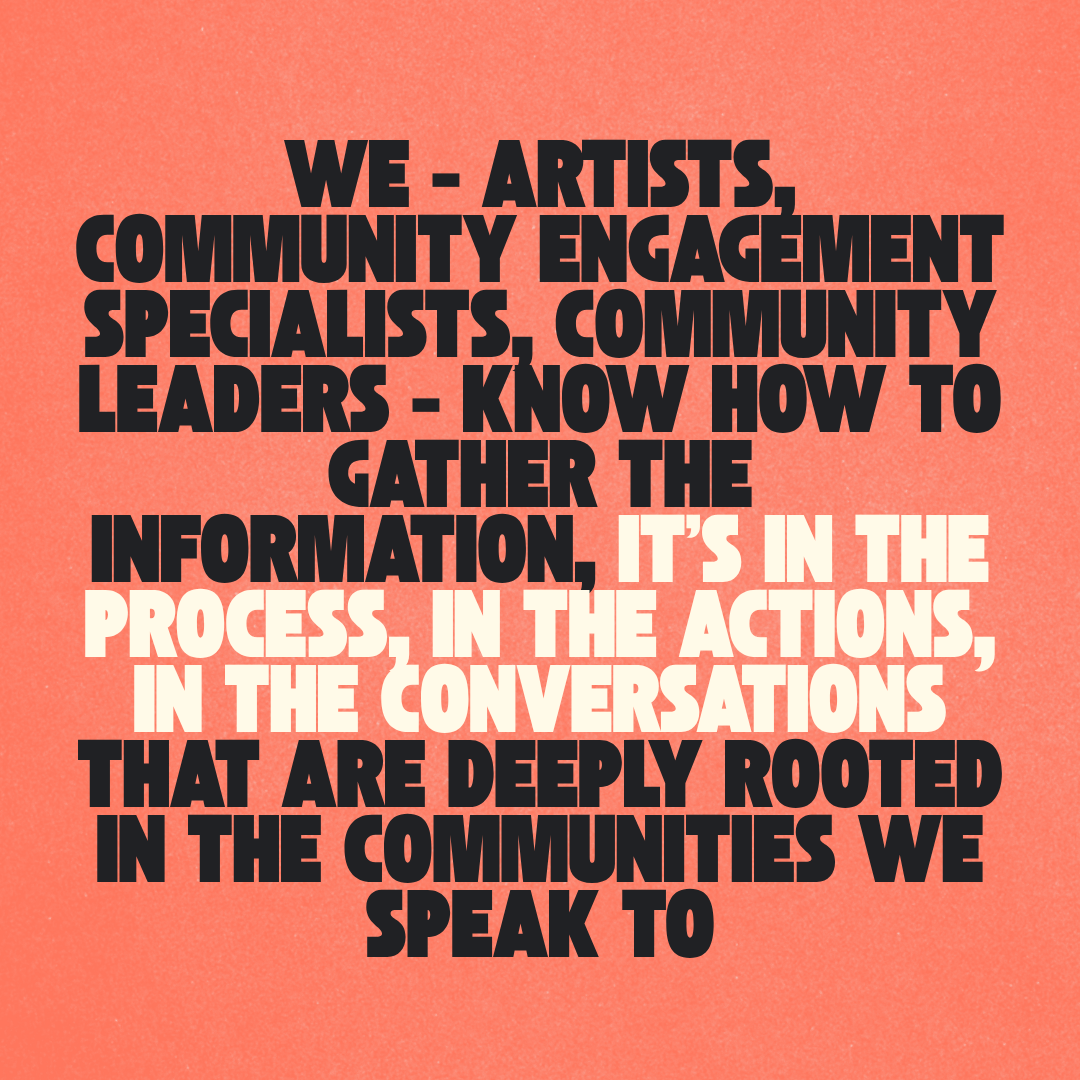
We, artists, community engagement specialists, community leaders, know how to gather the information, it’s in the process, in the actions, in the conversations that are deeply rooted in the communities we speak to But does the next tier - management, developers, financiers and boardroom - do they get it? Do they really care?
I guess there are elements I’m just not knowledgeable about that come into play and various areas of red tape. It seems whatever gets done, some people won’t be happy, they will complain that they'd rather have more bins or benches or parking or playing fields, or any other thing. We can't please everyone.
When I'm employed in arts engagement, I try hard to plan activities that connect participants to a project, make them happen in the right places, with the right approach, and I fight for those people. It's important they're treated respectfully and heard and encouraged. I've directed a number of community plays - back there again, aren’t I - but I've seen the joy and sense of excitement and achievement, fulfilment and emotion in participants when they are allowed to take a chance, step a rung or two higher up the ladder.
Yet, I've also seen artistic leads show no interest in youth and community work, almost belittling it, or another with elitist views like ‘this art isn’t for you’ type of approach. They weren't interested; they didn't give praise, say thanks or show any real understanding as to what the group had been through to get to that point. I’ve seen these gatekeepers, heard their responses.
It's the wrong people in the wrong room with the wrong job, and the wrong attitude.
These people who believe themselves to be above others need to re-evaluate their way of thinking.
Christine: And that's a fantastic way to end our conversation of wrong conversations.
Thank you and goodbyes
Christine: Thank you very much for taking the time to share your thoughts and insights and contribute to the Festival of Wrong Conversations.
Steve: You’re welcome.
Christine: Bye