
A conversation with Tom Burditt
CEO - Wildlife Trust for Lancashire, Manchester and North Merseyside
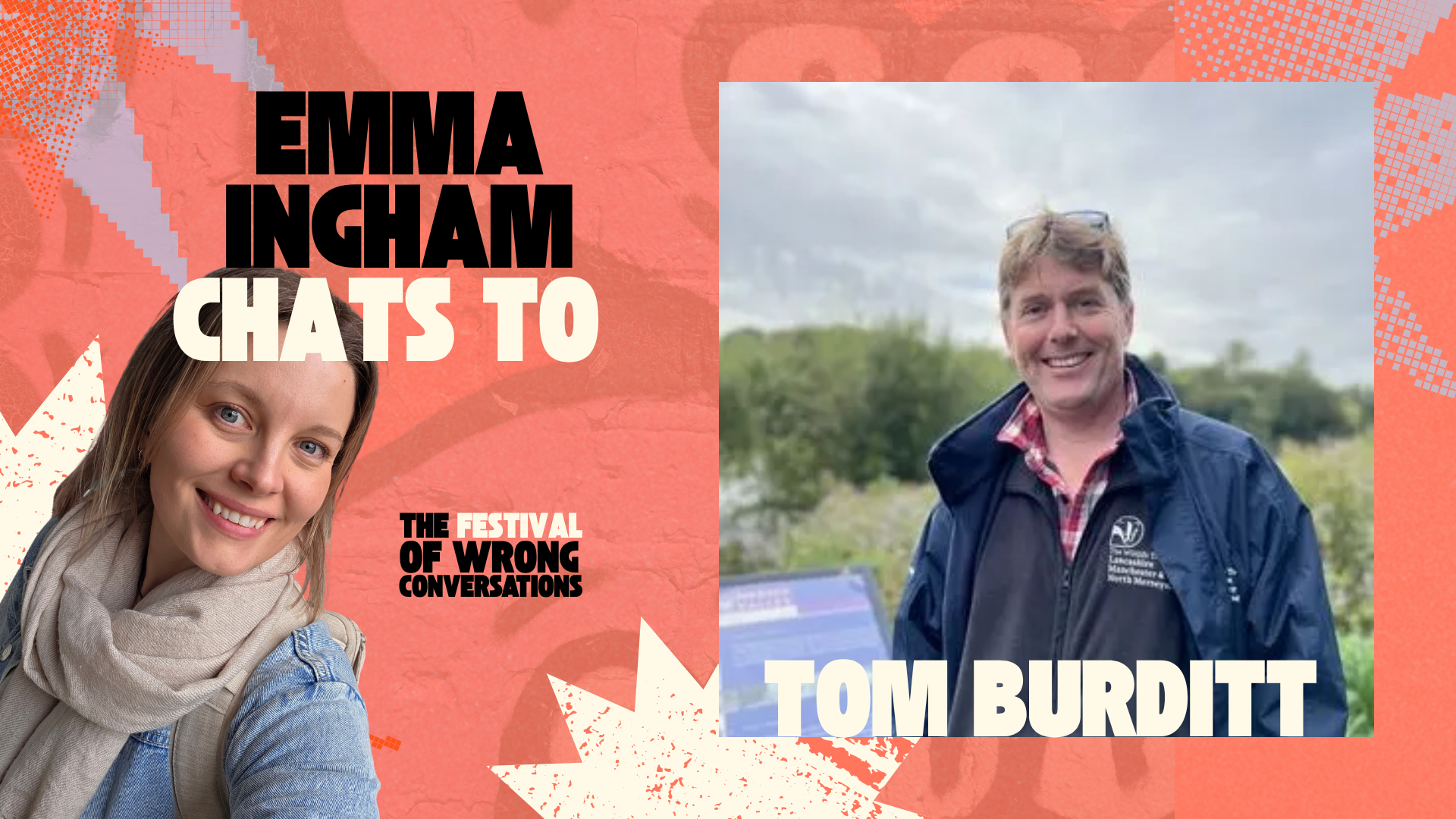
In this episode, I sit down with Tom Burditt, Chief Executive of the Wildlife Trust for Lancashire, Manchester and North Merseyside. I always look forward to chatting to Tom, and I was eager to dig a little deeper into his views on nature as health infrastructure.
The conversation didn’t disappoint - Tom is a passionate voice for nature, and brings a radical, multisensory perspective that I think traditional health estates thinking desperately needs. Rather than asking for a nice wildlife garden near a health centre, he challenges the whole system to flip the entire strategic narrative and treat nature as essential physical infrastructure for the collective health of people and planet.
We explore why nature must exist where people actually live. And Tom shares; why he thinks a genuinely healthy space starts with nature, shade, and running water; why we need to stop viewing green space as an optional cost; and how we move beyond grant-funded pilots to treat nature as permanent preventative health infrastructure.
Oh, and this conversation completely reshaped how I think about social prescribing – chatting with Tom made me lose my long-felt linguistic cynicism.
Join our wrong conversation.
The longer read
(Grab yourself a coffee…or a drink of your choice)
Not enough time? Find a snapshot of our conversation here
Tom: Sure. Thank you. I'm Tom Burditt and I am the Chief Executive of the Wildlife Trust for Lancashire, Manchester and North Merseyside.
Emma: And if you had to summarise what you do in just three words, what would you say?
Tom: So, I've got three here – of which one of them is two words, so I do apologise.
The first one is ‘manage’. So I have an organisation that I have to manage, which is the Wildlife Trust.
Then ‘lead’ is my second word.
Then the third word I had was ‘ambassador’ - particularly being a ‘nature ambassador’. There's a wider role in what I do where I see that I have to act as the voice of nature in in other sectors. And I'm trying, over time, to do more of the wider ambassadorial bit.
Emma: Great. Thank you so much.
What does a healthy space mean to you?
Emma: The first question is really quite broad, so please answer this in whichever way you choose to. What does a healthy space mean to you? What does that feel like? Look like?
Tom: I think this is a really interesting question and I think it can be viewed across lots of different layers.
Ultimately, I think a healthy space is a space in which you feel healthy - that is nurturing somehow. So it it's a place where, when you go to it, you're just, ‘oh yeah, I can feel myself getting better already’ - it's like your battery is recharging by sitting in it.
I can't envision a genuinely healthy space that doesn't have nature in it, or at the very least where the nature is visible out the window. And for me, a healthy space is almost always outside. If it's inside, it needs windows that open and for nature to be visible.
I think most healthy spaces that I think of are actually quite intimate too - so, the scale for me is as important as what it feels like to be in it.
When I saw the question, my head immediately went to a place where I was at a conference recently with the Wildlife Trust called the Hawkwood Centre, which is an alternative futures-thinking centre near Stroud in Gloucestershire.
Emma: Yeah, I’ve seen that place.
Tom: We were there in 40 degree heat and there was one little bit of the place outside where there was this beautiful old tree - I think it was a sycamore tree - hundreds and hundreds of years old, and a tiny little well with a spring. But there was something around the combination of the shade of the tree, and the trickling of water and I thought ‘this feels like a really healthy space’ - because it's felt nurturing spiritually and psychologically, as well as physically.
I actually took away a bit of an action from that visit in relation to civic spaces in this country. Looking at so many of our places in the context of a climate emergency situation - they feel REALLY unhealthy. When you go abroad, they often have town squares where there's trees everywhere so you can escape the heat by being in the shade.
Emma: Yeah, there are.
Tom: Or there'll often be a little fountain to sit by.
So the more I think about it, a healthy space always has water in it too - particularly running water – alongside the shade of trees.
I think everything else can change, but those elements for me are critical.
Nature. Shade. Water.
Emma: That leads nicely on to one of the other questions, and I think I can probably suspect what your answer might be.
Are (nature and) wild spaces part of health infrastructure?
Emma: Do you think then that wild spaces are just intrinsically a part of health infrastructure?
Tom: Yes, I do. Absolutely.
I think ‘wild’ though has different connotations and I don't think that ‘wild’ spaces necessarily means wilderness. I actually think that ‘nature’ would be a better phrase for the question.
So something I remember recently - last summer a family member had to spend some time at Royal Lancaster Infirmary - when you go to the café there's a courtyard in the middle of the hospital, but it's entirely grey. So you can go outside and you can see the sky, and you can feel the breeze, but there's no green space at all in that courtyard.
There's a slight distinction between wild and nature-rich - but I can't think of healthy spaces that don't have green in them. So, I don't think nature in health infrastructure needs to be a wilderness experience with, you know, loads of different wild species of trees, but I do think it needs to be a well-designed and considered nature space.
Emma: Yeah.
Tom: Royal Liverpool Hospital is the other one where occasionally I've had to go. There it's not just that there's no green space in the hospital, there's also no real green space that is visitable nearby for the staff - let alone for the patients or the visitors. So, it is just feel like this horrible kind of jungle of high-rise concrete, buildings, and dust.
I don't think a space can be healthy and not have green space.
Emma: I 100% agree with you on this, Tom. Thank you.
What should we stop doing today, for better health in the future?
Emma: So, if we are going to build a genuinely healthier society by 2040, what is the one thing that you think we should just stop doing? It can be something big, small, or somewhere in between.
Tom: Yes. So, I have to say out of all the questions you’re asking, this is the one I struggled with most – as I can’t answer with something we need to do less, or something new we should do.
I think the thing that we really do need to stop doing is seeing nature as a cost, and seeing nature as a non-essential.
If I think about, not actually the current government because I've got hope for the new Prime Minister, but under both the previous Labour regime and the end of the Conservative government, there was a feeling that nature was putting the brakes on development – so what we then needed to do was deregulate, remove landscape protections, and allow building to take place OVER nature.
And there was the general sense that it's ‘cheaper’ to do things without nature, and then nature automatically becomes seen as a cost. If you're going to embed nature into a development, it's an added cost - and then becomes an optional thing that is removed when budgets start getting tight.
What we need to stop doing, is to stop that way of thinking. We need to understand that nature can actual support development often more cheaply and of better quality than hard engineered solutions. And then we can change the way we think around the economics of nature and the value that we place on it.
So, it's hard for me to say about stopping because what I'm really asking for is a positive thing that we need to do differently.
Emma: Yeah.
Tom: But, it feels that until we've stopped seeing nature as a cost, then we're always going to be struggling with this.
There's a really good statistic that has been quite influential for us at the Wildlife Trusts at the moment - which is that for every pound spent globally on a nature positive practice, 30 times that amount of money is spent on a nature damaging practice.
Emma: Wow, that’s terrifying.
Tom: So, we've got to stop running a society in which we are actively investing money in things that are destroying nature.
Emma: Yeah.
Tom: And at the moment, no matter how much work we do as Wildlife Trusts or, you know, you do with the NHS estate that's positive, the reality is that far more money is being invested in things that are damaging nature. So, you know, converting rainforests into palm oil, or supporting fishing practices that are dredging up wildlife rich seabeds.
If you think at the moment about the number of heat and wildfire related deaths - destroying natural carbon sinks in rainforests and seabeds is only worsening the crisis. It's going to cost far more to clean up the impact than it would cost to look after the habitat in the first place.
There are so many different areas (health, pollinators, flooding, and so on) where it would be better to be investing in nature in the first place, rather than tidying up the mess because you destroyed the natural systems on which we're all dependent upon - literally the systems that sustain life on Earth.
It’s quite polemical this stuff if you're not careful.
Emma: Absolutely - it certainly can be!
Who would you love to hand a budget to, to design a space for ‘health’?
Emma: Now, if you could hand a chunk of budget to somebody who sat completely outside of the health system, who would you give it to, and what would you want to see them do with it?
Tom: So, I actually have a few different answers to this. When I thought about it, I'd probably give it to a to a good garden designer.
Emma: Okay, interesting. Tell me more.
Tom: I think that what gardeners, or a good garden designer, are really great at doing is designing spaces of all sorts of sizes, but which fundamentally are liveable spaces that just make you feel happy. There definitely is so much expertise within landscape architecture, nature conservation, and nature recovery. So I think a good garden designer probably would be the discipline that I would go to.
Then my other answer is thinking more about alternative healing.
When I grew up my Dad lived in Bristol, and near where he lived there was a Steiner school - and there was a tiny little garden there and it just had lovely landscape features with running water. My Dad also lived in Glastonbury at one point. There is lots we can learn from more ‘alternative’ practices.
I think some of these ideas would probably at one point be considered a bit ‘hippie’, but there are some really brilliant things around the way that practitioners design spaces with sound, and from a sensory perspective. It’s very healing is sound – and that makes me think of sound baths. So you know, there’s the potential to explore certain frequencies which can be very healing (and these are often common in nature: rustling leaves, susurrating reedbeds, tinkling water). You could also explore sky benches that enable you to look at the sky and listen to the leaves, certain sorts of wind chimes, Aeolian harps where sounds are made when the wind blows through. All those sorts of things would be important to incorporate as well - which I actually think a good garden designer would do instinctively.
So definitely my answer is gardener. But if you were asking me a second thing, I think some of the thinking would be around alternative healing - inspired by some of the places I hung out in as a kid.
Emma: Oh, thank you. I really like that answer.
Where would you simply not compromise when it came to design?
Emma: So, if you think about your philosophy around health, people, and place, and you put that into a building brief where somebody else is responsible for signing it off - what is the one thing you wouldn't want to compromise on?
Tom: I mean, I haven't got one answer.
But if I had to give a singular response, then I've already answered the question - I think nature-based shade would probably be it.
So the shade under a tree would probably be my single thing.
(And running water).
(Then something around the sound of nature. I think that would be quite high on my list too).
Emma: It's so interesting because everything you said so far is so sensory. It's all touch, feel, sound.
Tom: Definitely. My philosophy is that nature is inherently multisensory - it’s not just something to be looked at - even if a nice view still offers some benefit.
But you're absolutely right - in order to truly appreciate nature, you have to be able to touch it, hear it, and smell it. I wouldn't have probably come up with that answer without you encouraging me.
Emma: It's funny you mention nature being ‘looked at’, because I increasingly see more and more people talking about nature as this distinct destination that you ‘go to’.
Tom: Yeah.
Emma: That mindset and narrative is so frustrating. That ‘spectator’ experience lacks connection, and I personally find that the very language we use creates an automatic barrier between us and the natural world.
Tom: Yeah.
So this is definitely my philosophy, and I would not be doing this job without a leap of faith that I took during COVID. I used to work in the Lake District and I got increasingly frustrated with the fact that my job was looking after a place that by and large people ‘went to’. So you know you’d go to the Lake District on holiday, or for a weekend, or for a day trip or whatever.
And for me, my thing is that I believe that nature should be part of everyone's lives wherever they live. Nature should be a part of everybody's experience and it shouldn't be a place you have to travel to, because you already have it where you are.
Emma: Yes!
Tom: And I think that nature needs to exist within the communities where we live, just as it should exist in the spaces where we go to be to be healed when we're unwell.

Does green social prescribing ‘medicalise’ nature? Is there any tension in this?
Emma: Okay. That leads quite nicely onto social prescribing. It's a term I've always personally had a bit of an ‘issue’ with - I feel it has a slight kind of tension and friction within it because of the medicalisation, or commoditisation, of experiences that form a natural part of our daily lives.
So, I'd be interested to know from your perspective, do you think that social prescribing frames nature as something that is a medical intervention rather than something that's in line with the philosophy that you've just described to me? Is there a tension?
Tom: So, I think there's two answers to this.
So my initial answer is NO. I actually don't think there is a problem with it particularly.
Emma: Okay. That is really interesting to hear.
Tom: I think from the nature side, any positive development that understands that nature, and contact with nature, is important, and that can help to fund the provision of green spaces for wider health benefits is a really excellent thing.
You know, local parks and gardens department budgets have been absolutely slashed across local authorities, because it's seen as non-statutory, non-mandatory spend. It's often the first thing that goes, and that's just wrong. So the more that green social prescribing can help to reverse that by potentially getting money into provisions of nature – then I think that's a really positive development.
So, my main answer is that I think social prescribing is a real, real positive.
Emma: Yeah.
Tom: We now have a big team delivering this green social prescribing work. Probably unusually big for a Wildlife Trust, but we really believe in it. It's only opened doors, created opportunities, built support networks. So I don't have any reservations at all about the term, or its use at all.
I think the slightly different answer to your question though is a bit more nuanced.
Where I do think there is a problem with green social prescribing – is that it's potentially framing nature as treatment for when people get ill, rather than I think what we would like to see is that nature is part of the prevention.
If we have more nature in communities, in the places where people are living, and if we have better access to nature - both good quality green and blue spaces - close to where people live, then I believe that the health of this country would be better. People would be more active, people would be getting less ill, people would have better mental health – all through contact with the natural world, and through meeting other people in those environments.
And I think green social prescribing is currently seen as the treatment, not the prevention.
But we need both.
Emma: Agree. I totally, totally agree.
Tom: We need nature to be embedded in places to help people recover better, faster, and more cheaply. And we need more nature embedded across society so that people are less likely to get ill in the first place.
Emma: Thanks for that Tom.
I've always had that personal struggle with the phrase, but I think you maybe have changed my mind. Perhaps I’ll always struggle with the semantics, but then equally sometimes you need to be able to put a label on something - make it recognisable in order to be able to scale it, and allow people like you and others to do the work you do.
Is now the time for ‘green social prevention’?
Emma: Okay… Hmmm…
So, let’s take your thought a bit further. If there are programmes around ‘social prescribing’ for treatment - do you think there's opportunity to have sort of a ‘social prevention’ workstream which is more formalised in the way that social prescribing has been?
Tom: Yeah.
Emma: Simply, my question is do you think we need ‘green social prevention’ as something similar to ‘green social prescribing’?
Tom: I think it would be amazing.
And I think there's been hints of it in Greater Manchester under Andy Burnham, which is why I'm excited about him becoming prime minister - because of his investment in green spaces (The Mayor’s Green Spaces Fund) where there is the core idea that having more accessible green spaces is just part of what a liveable city looks like.
So the projects that have been funded by the Green Spaces Fund are generally small amounts of money largely to either create, restore, or improve spaces. There was a rewilding of a bowling green, places for sustainable urban drainage, food growing projects, de-paving on city street corners - it's quite a variety of different sorts of projects. And there weren't direct health KPIs and impact measures, but there was an awareness that there was a link between that funding stream and a broader health prevention agenda.
Whether that type of approach and investment will stretch to his prime ministership I'm not sure, but…
Emma: Fingers crossed.
Tom: Yeah, fingers crossed.
I mean, I think it's probably been the most positive time that we've had for green spaces for I don't know, maybe 16 years.
How does the NHS invest in nature as health infrastructure?
Emma: So, let’s think about funding then. Let’s put a Wildlife Trust CFO and the Director of Finance from an NHS trust together in a room – they are both finance, but perhaps don’t always speak the same language. How do you bridge the language gap so the NHS can actually invest in nature as core health infrastructure?
Tom: So it's funny, as when I read this question my initial response is that I'm actually not sure that they speak as different languages as the question suggests.
So, if I think about my CFO, he would be talking about reducing costs and procurement, how we could refine and diversify our income streams and make them more efficient, looking at our fundraising and investment strategy, about financial risk and improving our financial resilience. So I would like to think that NHS financial managers are also thinking about those things. So, I think I think there's a lot of synergy, and I think they would probably go away and have a good conversation!
But in terms of how we’d make a case around the measurable financial benefits of investing in nature for health?
We've had economic analysis of our green social prescribing programmes that was done at a national level. The social return on investment of investing in green social prescribing is six times what you put in – so there is evidence that if you spend money on this you are saving money in wider society. And that isn't just directly around health and lowering healthcare costs - it's also about getting people back into work, prevention of reoffending, and so many other benefits indirectly benefitting health. So, there's there is there is good evidence.
So I think there is a financial investment case that can be made just within the NHS - on the treatment side, AND on the prevention side.
But the real return on investment is when you're factoring in other socio economic benefits as well.
Emma: So, in your experience where you've done this sort of work, have you ever found there's been push back because the benefits are SO wide and cross organisational – and that presents an issue from an investment perspective?
Is there the attitude of ‘we can’t invest all the money into this initiative if we're not going to be the only beneficiary’?
Or are we not talking about big enough sums of money in this instance?
Tom: I think we're not talking about big sums of money at the moment.
The main source of funding for this sort of work is still grant funding. I can't deny that most of our funding is in some way, shape, or form coming from the National Lottery - Heritage Fund or the Community Fund – the people's Postcode Lottery, the Esme Fairburn Foundation, places like this. A lot of the really good work we do is still effectively subsidised from philanthropic sources.
Emma: Okay.
Tom: And where we do get direct commissioning it's relatively small sums of money.
Emma: And do you think there's a long way to go until you get to the point where there's more direct commissioning under organisations like the NHS’s statutory responsibilities?
Tom: Yeah, I do. I think we talk about that as being a kind of ‘magic bullet’. We've almost given up waiting for that…
We have had dialogue with other people in the system - national bodies who have said we need to collectively stop talking about ‘pilots’ and that green social prescribing work is now mainstream.
But it is not mainstream. It doesn’t become mainstream until the NHS is directly commissioning our services and paying for the service that we're providing rather than relying on us doing it because we're funded from other sources to provide a service that the NHS can refer into for free. So, until we're getting direct commissioning, it's always going to be a pilot.
Emma: Yeah.
So from my perspective - and wearing my NHS estates and health infrastructure hat - this idea of ‘mainstreaming’ is a conversation I find myself having time and time again. Right now, there isn’t really any basic grounding within infrastructure strategies and capital investment frameworks that allows NHS investment into more preventative and health-creation programmes and projects (and by investment I mean time, energy and ideas as well as money). I feel there is this massive missing link in health infrastructure strategies across the country.
There’s a polite, and usually generic, nod to green space, a nod to place-based development, a nod to linking with public health, a nod to regenerating high streets, etc. But what we really need are Integrated Care Systems actually investing time and energy into treating green and blue spaces as intrinsic health infrastructure - not just an afterthought, or a garden somewhere, or as something to be managed inside a Trust’s Green Plan.
We have to totally flip the strategic narrative around natural infrastructure for health. Because before anyone is able to spend any money on any of this, you have to establish a baseline that gives nature a strategic foundation alongside health buildings - not as a nice to have, but as core physical infrastructure.
Tom: Yeah. Exactly.
Are NHS, public and civic spaces over-manicured? And what does that mean for nature?
Emma: Okay, final question. We spend time, effort and money spraying weedkiller in pavement cracks and manicuring entrance ways across the public sector. What do you think our obsession with ‘tidying up’ our public buildings and urban spaces in this way tell us about how institutions view nature?
Tom: My answer to this is probably slightly different to what you were expecting me to say…
The thing that I agree with is that I think there's easy ways that you can reduce management costs for grounds maintenance in a way that is better for nature, and therefore better for people. If you are using less chemicals and you’re not mowing every bit of grass to within an inch of its life all the time, you will save money. So there's definitely good evidence I think for that, and the people who look after the NHS estate could probably save money and benefit nature at the same time.
The bit though where I slightly disagree is that it's a very fine line between somewhere looking natural and somewhere looking uncared for.
So I actually think that entrance ways for instance are really, really important. If I'm arriving at a hospital or a health service, I don't want to not be able to get to the door because there are weeds growing up through the steps. Or end up with wet trousers because it’s rained and I have to walk past long grass. So, I think those things are negatives.
I think the key to nature friendly design is you have a balance – you have your wildflower borders, or your gardens and trees, but you also have really well looked after entranceways.
You have a meadow, but you mow a path through the meadow. Or you have a really nice hard surface walkway across a field that stops it getting muddy, and everybody can walk through the field in a way that doesn't damage the field.
There's some lovely stuff from wild play. In terms of your earlier question before around what professions would you talk to, I think wild play designers is another one that's really good. A lot of the principles of wild play is that you don't just go from A to B through the quickest route - it's all about going: around, over, under, and through.
You could have this wonderful wild flower meadow that floods when the river is high and creates some natural flood management benefit, then there is a really nice boardwalk around the edge, or a nice bridge over it and a viewing platform. Or you could create a mowed path through a hay meadow. I think those kind of things are all really great and can work really well.
There is also something really important in thinking three-dimensionally when it comes to nature design too.
Emma: In terms of some of those opportunities you’ve mentioned - do you think there's any really kind easy quick wins from more of a retrofit perspective?
I mean you've just said wildflower meadows with mown paths. So that that makes sense and you could do in most places. Is there anything else that you could see as being fairly implementable quite quickly across public spaces, civic spaces, NHS trusts, hospitals etc?
Tom: There are some brilliant examples at Northern Flower House in Liverpool. They are amazing at creating really kind of natural looking wildflower meadows in spaces - there's an examples of a running track in Rimrose Valley, and in the middle of the running track is a wildflower meadow.
Emma: Oh, wow.
Tom: They have the ability to develop sites in the city where they they'll sow flowers and create these incredible spaces relatively cheaply. So I think there really are quick wins -you could take an NHS site, and the places which might currently just be like mown grass, you can reseed them and get them creating pollinators and wild flowers.
I think there's other opportunities around trees. There's some really good stuff in Paris where they get sponsors for c.2 metre square area around a tree - the idea is that you de-pave the space, and then you get people to come in, sponsor, and look after these mini plots around the city trees.
Emma: Nice.
Tom: I think there's an awful lot that can be done three-dimensionally with climbers that go up buildings.
I think that one of the things we say a lot is that if you could do one thing in a garden to benefit wildlife, it’s to put a pond in. And I think a similar thing could apply within the NHS estate - I'm sure there'd be worries about health and safety, but you can cover the pond in a metal grill if you want, or you can do a raised pond.
Also anything involving de- paving is good - replacing it with grass, with flowers. And there is also good evidence that concrete areas attract rubbish and green areas don't. So actually, if we rip up concrete and replace it with something green, it look nicer, water gets through so you reduce your flooding impact, and it should attract less litter because it's less likely to be littered as a green area than it is as a concrete area.
Emma: I mean, there's always so many like concrete corners, aren't there, in hospitals?
Tom: Yeah.
There are some fantastic hospitals where money and time have been spend on good design – but for every brilliant Alder Hey there are so many more sites that don’t look like that. So many NHS places ae actually worse than much of our civic infrastructure – and these are the places we're going to in order to get better and heal. So yeah, a little bit of investment in green and blue spaces would be would be amazing.
Thank you and goodbyes
Emma: Okay, that bring us to the end of our chat. Thank you so, so much for joining me today, Tom. It is has been great.
Tom: My pleasure. Thanks, Emma.
Emma: Bye.
Tom: Bye.