Co-medical director & GP - Lancashire and South Cumbria Integrated Care Board
I’ve wanted to have a conversation with Andy for many years now and I was super excited to finally make it happen (SPOILER: it was worth the wait).
As a champion for human-centred care, Andy brings an electric passion to how we rethink health spaces. We explore why clinical environments often feel oppressive, why true hospitality is the missing foundation of healing, and how community co-design and a culture of joy can transform health infrastructure from the ground up.
This chat goes way beyond bricks and mortar.
Our conversation feels like an urgent manifesto for reimagining public space culture: considering why curiosity and radical kindness save lives, and why restoring warmth, gratitude, and humanity into the very fabric of health spaces isn't idealism. It's the future we need.
Join us for the wrong conversation.
*Video version coming soon*
The longer read
(Grab yourself a coffee…or a drink of your choice)
Not enough time? Find a snapshot of our conversation here
Emma: Hello Andy – lovely to see you this morning.
Andy: Hi Emma.
Emma: Andy, please could you introduce yourself, tell me what it is you do, and then please describe your role in three words.
Andy: My name is Andy Knox.
I am a GP and I am a partner at Ash Trees surgery in Carnforth, Lancashire, which I do part-time. And I am also a co-medical director of the Lancashire and South Cumbria Integrated Care Board (ICB). We're a commissioning organisation that work out how health budgets are spent across the NHS in our region of Lancashire and South Cumbria.
But I guess I'm also a husband and a Dad. And a brother, a friend, a cousin, and a son - all kinds of different roles like that.
Emma: Fantastic.
What does a healthy space mean to you?
Emma: Okay, let’s move on to your questions. What does a healthy space mean to you, Andy?
Have you ever been in one, seen one, felt one? Just sort of talk me through what that looks like.
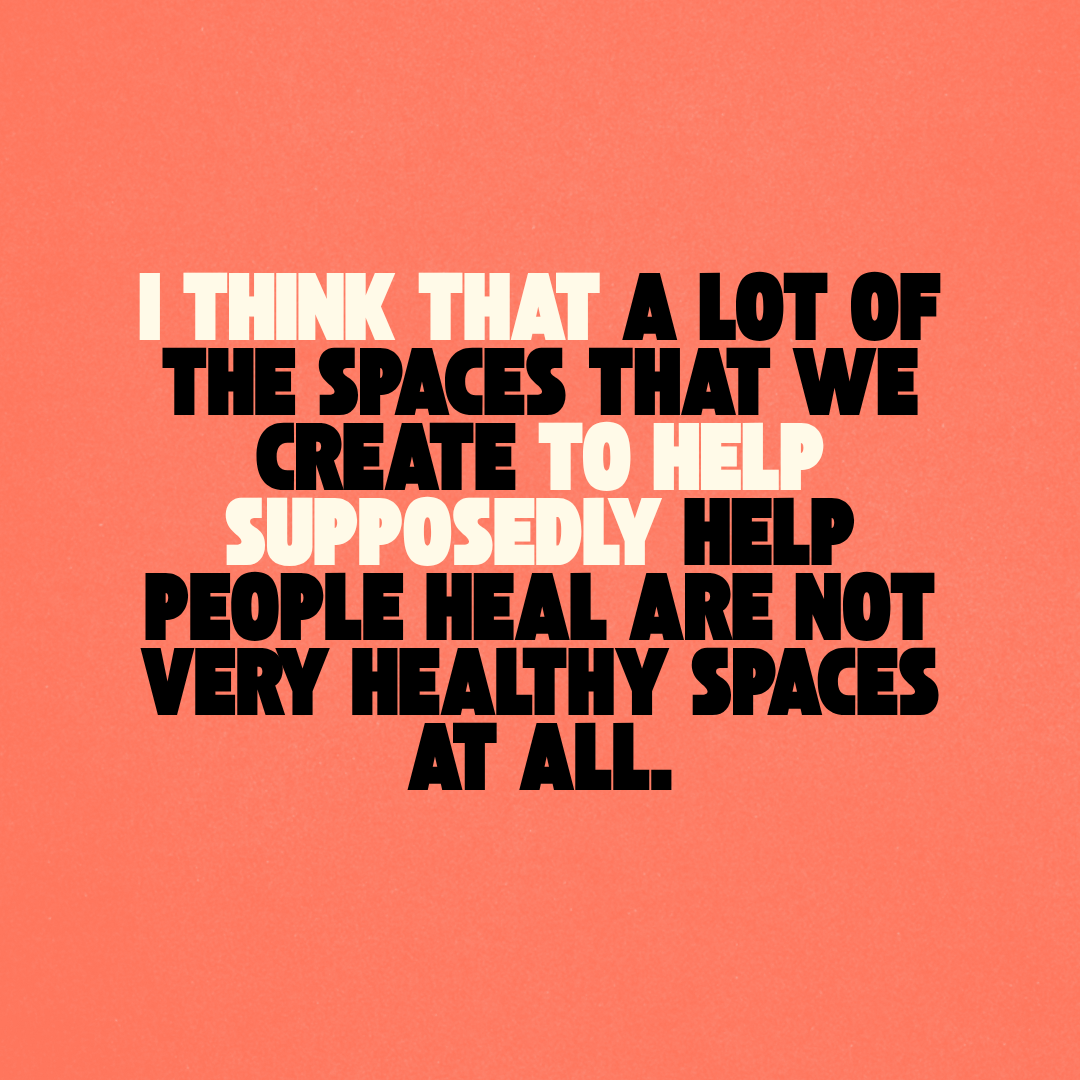
Andy: I've been thinking a lot about healthy spaces. I think that a lot of the spaces that we create to help supposedly help people heal are not very healthy spaces at all.
When I think about what it means to be in a healthy space, it normally means being in and around nature, for sure. So, I live in a beautiful little village called Silverdale, which is in an area of outstanding natural beauty in Morecambe Bay.
And I find that to be a really healing place to live - it's by the sea, with beautiful views of mountains, loads of trees around, the air is lovely and clean. And I've been in tonnes of healing places like that in my life.
So, whether it's been in the in the Alps, or in the mountains in the Lake District, or up in Scotland. Or on the sea, or in different islands and places I've been around the world - I find nature to be an incredibly healing experience.
I also actually think that places where you can relax and absorb yourself in what feel like healing experiences feel very healthy. I know this sounds really like super middle class, but I would say I find spas really relaxing. But it’s because it’s a quiet environment that's really beautiful, and where you know that you're going to be able to breathe deep, slow down, and look after yourself a bit - or be looked after.
I also think some hotels do that really well.
I used to live in South Africa, and we went to a farm once in South Africa on the Garden Route between Cape Town and Port Elizabeth - and it was just one of the most healing places I've ever been in my life. I literally sat at breakfast one morning and just cried because it felt so beautiful to be there.
Emma: Yeah.
Andy: There was love, and there was kindness, and there was goodness. The food was delicious and the hospitality was so generous. There were horses, there was nature, and there was music.
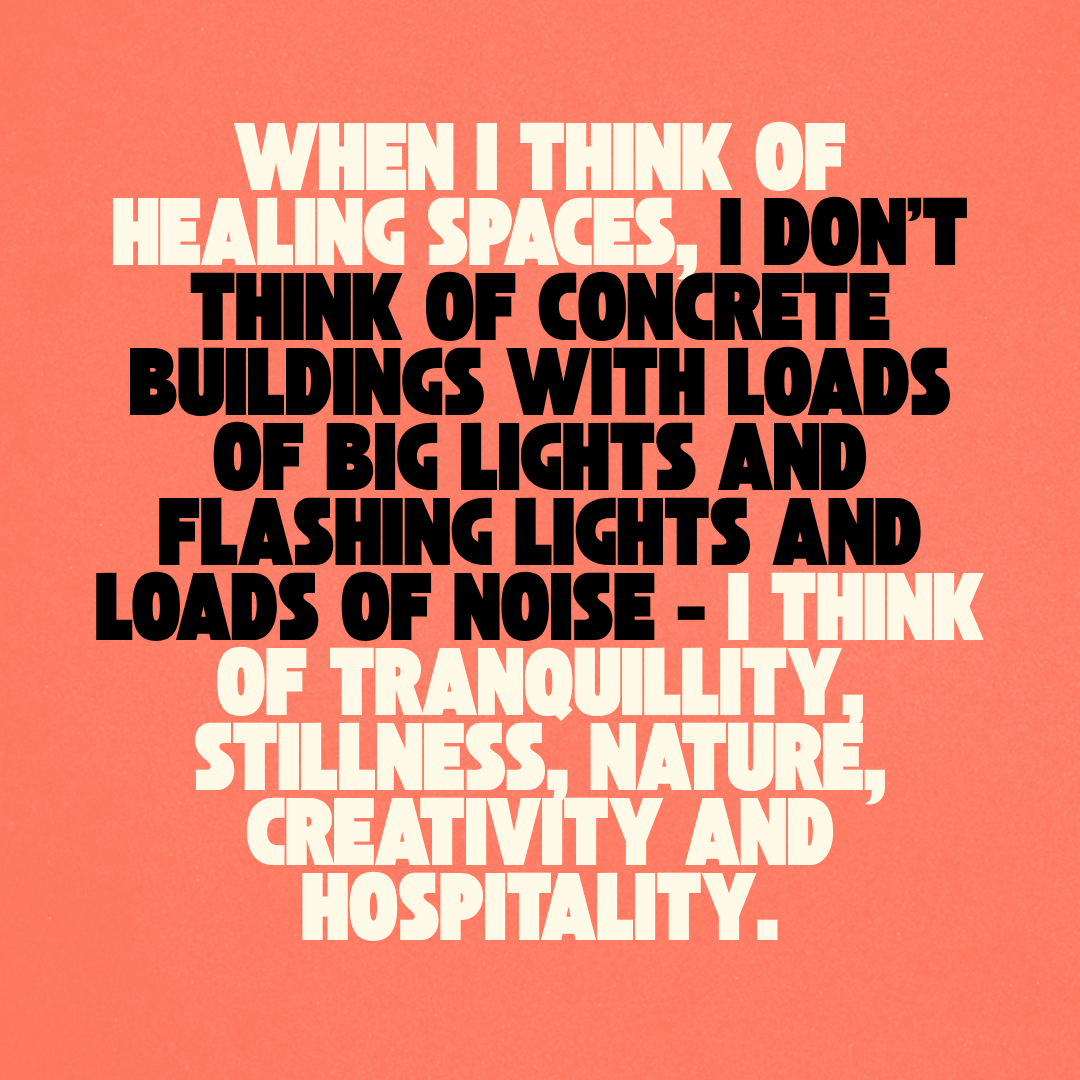
So when I think of healing spaces, I don't think of concrete buildings with loads of big lights and flashing lights and loads of noise - I think of tranquillity, stillness, nature, creativity and hospitality.
Emma: Thank you. I love your use of the word ‘generous’ as well. I think there's something there something really interesting, because all those things you've just described, they do all have a generosity to them, don't they? Whether that’s space, time, or attention.
It’s a word I've never ever used before when thinking about healthy spaces. And I think it's a really I just think it's a really nice word – one that’s very apt.
Andy: Yes. I was actually in a conversation this morning about hospitality and healing - I think that hospitality isn't possible without generosity.
Emma: No, true.
Andy: You can't be hospitable unless you also have a generosity of spirit.
Emma: Yes.
Andy: But if you think about the root word – hospice, hospital, hospitality, right? These are places where we are to create spaces where people feel welcomed. I was in a conversation with a linguist this morning called Ben (Dr. Ben Dalton) who's just amazing.
Andy: And we were talking about the root word of hospital, which is ‘hospe’ - it means to be both guest and host simultaneously.
Absolutely incredible idea - that you are both a guest and a host.
Emma: Yeah.
I love speaking to Ben and sharing ideas with him – he’s part of this festival actually, and we chat about all things language and health and infrastructure! (see Part 1 of our Picnic in the Park here)
Andy: When you think about even the art of healing and healing spaces, we are both simultaneous guests and hosts, right?
So as a patient, you’re a guest in the facility where you're trying to heal, but you're also the host of your own journey - and the team around you are guests of your hospitality. As a caregiver - doctor, nurse, or allied health professional - you’re hosting someone's recovery, but you are ultimately a guest in their life.
Emma: Yeah. Really interesting.
Andy: And I wonder if we think of our spaces as places of hospitality in which we are both simultaneous guests and healers, or guests and host… What does that what does that begin to do? What does it begin to make possible? How does it change our mindsets? I love that idea.
Ben and I were talking actually about the French psychiatrist Jean Oury.
I don't know if you've ever had a conversation with Ben about him, but Jean's a psychiatrist in France who used to say we cannot heal others until we ourselves are healed.
But he also said that hospitals cannot become places of healing until hospitals themselves are healed. And that is so true I think. So many of our places of hospitality and healing are themselves actually quite broken and abused places. Right?
Emma: Yeah. Totally.
Andy: So how can we expect them to become places of healing - real healing - when they are in fact places that are so fractured and so broken. And that is broken culturally, relationally, but also physically in terms of the spaces that we've created and have actually built.
Emma: Thank you. Wonderful thoughts.
What should we stop doing today, for better health in the future?
Emma: Okay, moving on away from healthy space - well, not away from healthy space, as this whole conversation is about healthy space and healthy spaces.
My question is - if we're going to build a healthy society by 2040, or 2050 (the year doesn't really matter), what is the one thing that you think we must stop doing today that would have the most impact?
Andy: I think we've got to stop disconnecting, and fracturing - I think we've got to rebuild connection and community.
So we've got to stop hating each other and we need to start loving each other a whole lot better than we do at the moment.
There's this real big craze, at the moment in talking about neighbourhood health.
Emma: Mmmm - yep, lots of talk.
Andy: I think one of the most powerful things that anyone's ever said is ‘love your neighbour’. Because that isn't about loving the people you like. It isn't love the people who are easy to love. It's love the people who live right next door to who drive you crazy by the noises they make at 3:00 in the morning. It's love the people who don't look and sound just like you. It's love the people who are really complex, who have really hard difficult lives, who you sometimes want to judge or stigmatise.
But actually we need to do better than we are.
Emma: Yeah.
Andy: I wrote in my book Sick Society that I think we have to recover love - love in all of its forms.
One of the things I love about what bell hook says in her book ‘All About Love’, is she says that love is a verb - it's a gritty, determined effort. It's a choice. It isn't a lovely gooey feeling that's easy. It’s hard.
And if we're really going to build a society that works for everyone, if we're really going to start having a healed society – it’s going to be impossible to do unless we learn to love each other.
Emma: Yeah.
Andy: And that means we’ve got to stop pointing the finger.
We’ve got to stop hating.
We’ve got to stop dividing.
We got to stop fracturing.
We’ve got to stop blaming.
We've got to become true hosts of ourselves and others.
And that all means we need a generosity of spirit and an ability to love beyond ourselves. And I think that's how we're going to build a society that's truly healed and well.
Emma: Beautifully put. Thank you, Andy.
Who would you love to hand a budget to, to design a space for ‘health’?
Emma: Now let’s think about budget and money. If you were going to hand a chunk of budget to somebody who sat completely outside the NHS and the health system to do something with a space - who would you hand it to? And what would you like to see them do with that space?
Andy: I thought this was a brilliant question. So, I absolutely believe that health and well-being is built with people within neighbourhoods and communities.
Emma: Mhm.
Andy: And I think so much of the time we try and do things to communities rather than really listen to them and understand who they are, and what they already have.
So we don't really build around what they need, because we don't start with what they've already got and what's already amazing and strong.
So let’s say we wanted to build a community health centre or some kind of facility - I would give the money, and say, to the people who live within that community. I would start with them.
I'd ask them - what is it that you've already got and what is it that you want and what you need? How can we start with what you've already got, and maybe do something transformational with it? Or if we were going to start it from scratch, what’s true for what you as a community of people need?
Emma: Yeah.
Andy: And what would be so beautiful is that it would look completely different in Preston, Lancashire to how it would look in Soho, Central London, to how it would look in um Toxteth in Liverpool to how it would look in Whitby, Yorkshire.
Emma: Yes!
Andy: There would be beautiful different, vital gorgeousness that would come out of the creativity of those people locally. And I would trust them.
Now what would I love to see as part of a space they create? I guess it's not up to me because I'm not them and I don't live in that community. But I would want it to be true of who they were.
And I would want it to be a space that was radically inclusive, that thought about difference and different people and different needs. It shouldn’t be homogeneous or one-size-fits-all, but heterogeneous - full of rich colours, varied vibes, and a celebration of difference held together by togetherness.
And we need to consider all types of diversity – take neurodiversity for example. I was in a workshop recently with people with autism and they shared how oppressive many standard NHS buildings can feel - full of loud bangs, unpredictable noises, and unfamiliar things. We have to be able to ask how do we design spaces gentle and adaptive enough for those sensory needs?
Beyond removing sensory friction, we must make room for what helps us thrive. So, spaces that are deliberately designed to bring people together and to create a sense of harmony and collaboration.
Andy: I'm biased, but for me, a space like this would always involve music.
I love music. I think there's something vitally beautiful about creativity and art and music. Then I’d want any space to also connect in and through with nature in some way.
Emma: Yeah.
Andy: Those things would be the things that feel really important.
But's got to start with the community for whom it belongs, and they've got to be the ones that design it through an inclusive, representative and thoughtful process - not an exclusive process by a clique.
Emma: Yeah.

Emma: A follow on question to that…
It's really interesting that you said that with these spaces, we don't want them to be designed by ‘cliques’ from within the community. I think we're aware where that has happened in the past – where some people are more visible, active and vocal than others. Their voices are great, but often not representative of everyone.
I’d like to know your thoughts on the importance of including younger people and children in the design of buildings that are deemed to be ‘community assets’ - the sort of spaces that are going to be part of the places that young people today will live for the rest of their lives. Do you think we always give the youth of our communities parity when it comes to shaping the design of physical buildings?
Andy: I don't think we think about them at all very often - apart from maybe in some spaces that are designed exclusive for children and young people.
Emma: No.
Andy: Like Alder Hey Children's Hospital. That is a beautiful, incredible space that feels quite child- centric. And it's meant to be, because it's a hospital for children, right?
Emma: Yes.
Andy: Or Derian House Children's Hospice in Lancashire is an absolutely stunning space that they've created together with children.
Emma: Yeah.
Andy: But I don't think we do it anywhere near enough.
I just love the idea of putting children front and centre of everything that we do and think about. I’d want to see kids actively involved and actively considered in how we design spaces.
And I think we can be a bit twee about spaces for young people as adults, right? We can often be like - oh, young people will want technology, and they'll want loads of gaming and they'll want this and that. And we put stuff onto young people that is often not true of them at all.
Emma: Yeah, that happens so often!
Andy: I was in Fleetwood the other day and there's a beautiful story there of how the community trust have bought the old hospital, and they are transforming it into a truly community space – the HUB Fleetwood. It’s a space that really serves the needs of people and the young people have a youth zone. And they wanted their like side rooms to look like beach huts, and they've asked the mental health trust CAMHS to completely move their CAMHS (Child and Adolescent Mental Health Services) into the youth zone rather than in a health centre.
So all of CAMHS now operates out of this community owned space that has been designed by the young people themselves. They know when they're going for their CAMHS appointment, that they're going to one of the beach huts – and they get to sit in a room that's been designed by themselves, in an environment in which they feel comfortable.
I think that is a beautiful example of how we really encourage children and young people to be part of the design to own it and to know it's theirs and it didn't have loads of XBOXes, or whatever in the space. It was just comfortable and safe and that felt really beautiful.
Emma: Okay. Love that.
I’m going to give you a paintbrush - what sentence would you paint on the wall of every NHS building across the country?
Emma: So, back to NHS buildings then.
Andy: Yes.
Emma: If you could paint one giant sentence on the wall of every NHS building across the country, what would you like it to say?
Andy: I mean, I'm torn. I've got a few sentences that really matter.
Emma: You can have a few. That's fine. We like rebelling against the questions.
Andy: I know you do because it's like that's the whole point of this! It's the wrong conversation. So, I'm going to answer in the wrong way and I'm going to give you a few sentences.
Emma: That's great!
Andy: Okay. I have a few things that I really live by.
Someone asked me recently - what do you most want your kids to know? And I want my kids to know that they are unconditionally loved, that they are seen and valued for who they are, that they belong and are always welcome in my home, and that they have a real purpose in their lives.
And they are all things I'd love everyone to know about that all the time - you are loved, you are seen, you belong, you matter. I think those are four fundamental truths that I would love painting everywhere.
Emma: Fab.
Andy: I guess a second would be - and this used to be my favourite hashtag when I used to do Twitter before it became X and absolutely vile - try being grateful #trybeinggrateful.
Emma: Okay.
Andy: I think we get so moan-y about the NHS. And I'm not saying it's perfect - don't mishear me. I'm not saying like that the NHS gets everything right every day. There’s loads of stuff that that we're constantly trying to improve and get right.
But I've also worked in sub-Saharan Africa where there is so little health care.
And I've been to nations where you have to pay through the nose for healthcare, and people die because they can't afford it. And we have this incredible gift - free health care for everybody, at the point of service no matter of ability to pay. And I think we moan about it too much sometimes.
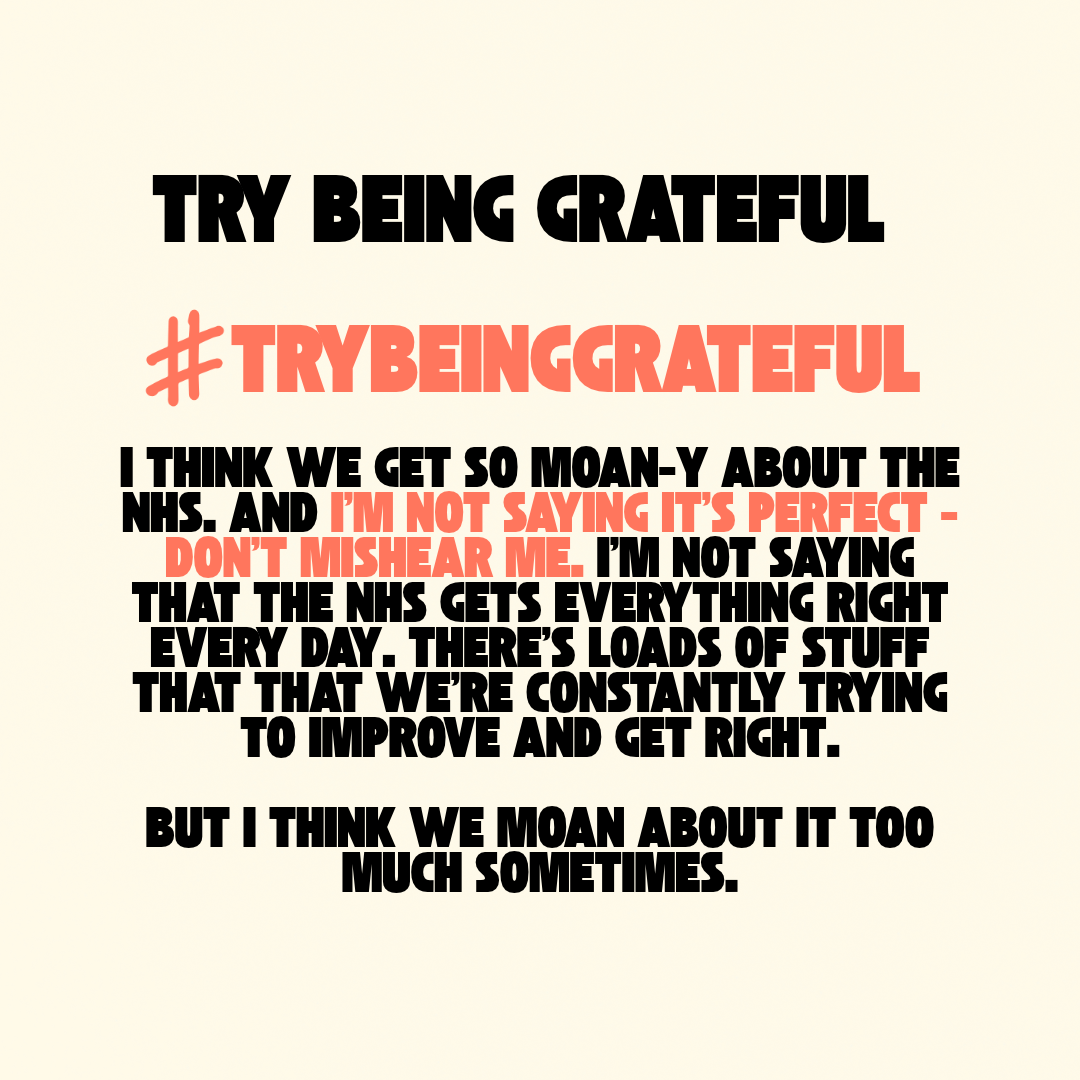
And there are times when I just want to say - you know what, try being grateful. Gratitude also totally changes our attitude, and it changes our ability to receive healing - because it's a gift.
And so if we can receive a gift gratefully and find the goodness in it, maybe we also maybe we also heal better too. So there's definitely something for me about writing - ‘try being grateful’.
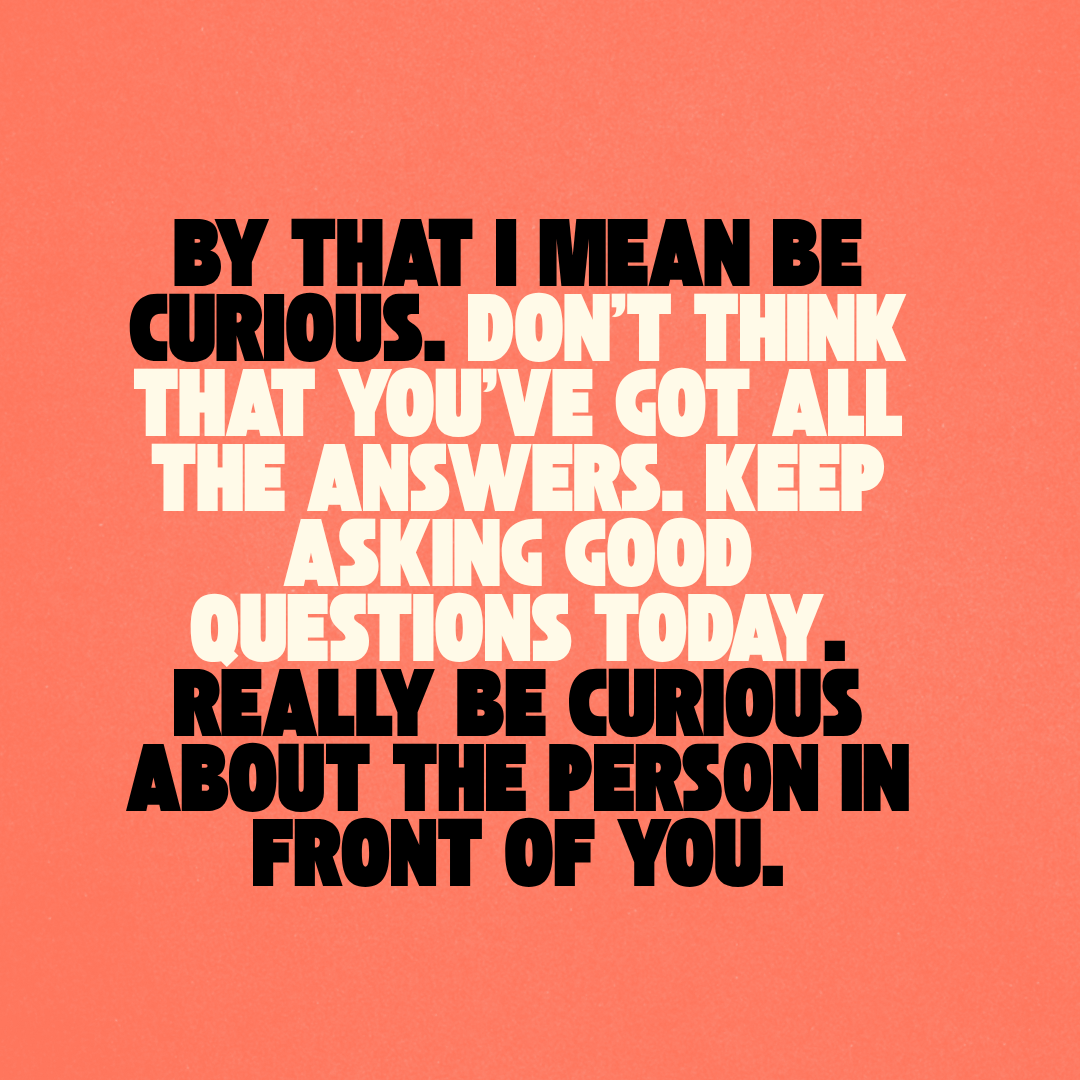
Probably another one as well. I'm writing a new book at the moment called Don't Be a Cock, Be a Chicken – I’d write that on the wall too. And that would be my reminder to people who work in the NHS is you know what you can choose to be anything today – so don't be a cock, be a chicken. By that I mean be curious. Don't think that you've got all the answers. Keep asking good questions today.
Really be curious about the person in front of you.
Emma: Yeah.
Andy: Don't make judgments or assumptions about them. Don't think that because some treatments worked on the lady over there that it's necessarily going to work on this person too.
Like be really curious about their life, what matters to them. About their autonomy, their sense of self and purpose.
Be curious, be humble.
You don't know everything. Keep learning. Keep asking.
What's the patient really saying to you? What else is going on?
Be radically inclusive both in your team, but also the people that you're looking after.
Be compassionate. Like really deeply care about the person in front of you. If you're having a hard day - choose love.
Choose kindness, and then be kind.
There's this amazing study that shows that one of the highest predictive factors of how well you do on your cancer journey as a cancer patient is the kindness of your lead clinician.
We have to be radically kind. Then we have to be empowering of people to make good choices themselves, as well as be empowered to do their jobs well.
And then we need to nurture people. We have to really care for people. And so I would say ‘don't be a cock be a chicken’.
I think that's probably a good summary of what I’d like to write on the NHS walls.
Emma: That's absolutely brilliant.
Are we curious enough in the NHS about people and places? And does the NHS think creatively enough?
Emma: Then the next question – and you've actually picked up on a little bit of this in your last answer - it's around curiosity.
You're super passionate about health inequalities, and it feels true to say that the world in which you work - it's a space that requires a huge understanding of how people live and how people interact. There are lots and lots and lots of layers – both seen and unseen.
In your experience, do you think that the NHS as a whole as an organisation and a network of organisations is curious enough about people and places?
Andy: Ok.
Emma: Then as a follow on - does institutional pressure stifle creative thinking? Do you think we are creative enough? And do you think that we are curious enough in the world of the NHS?
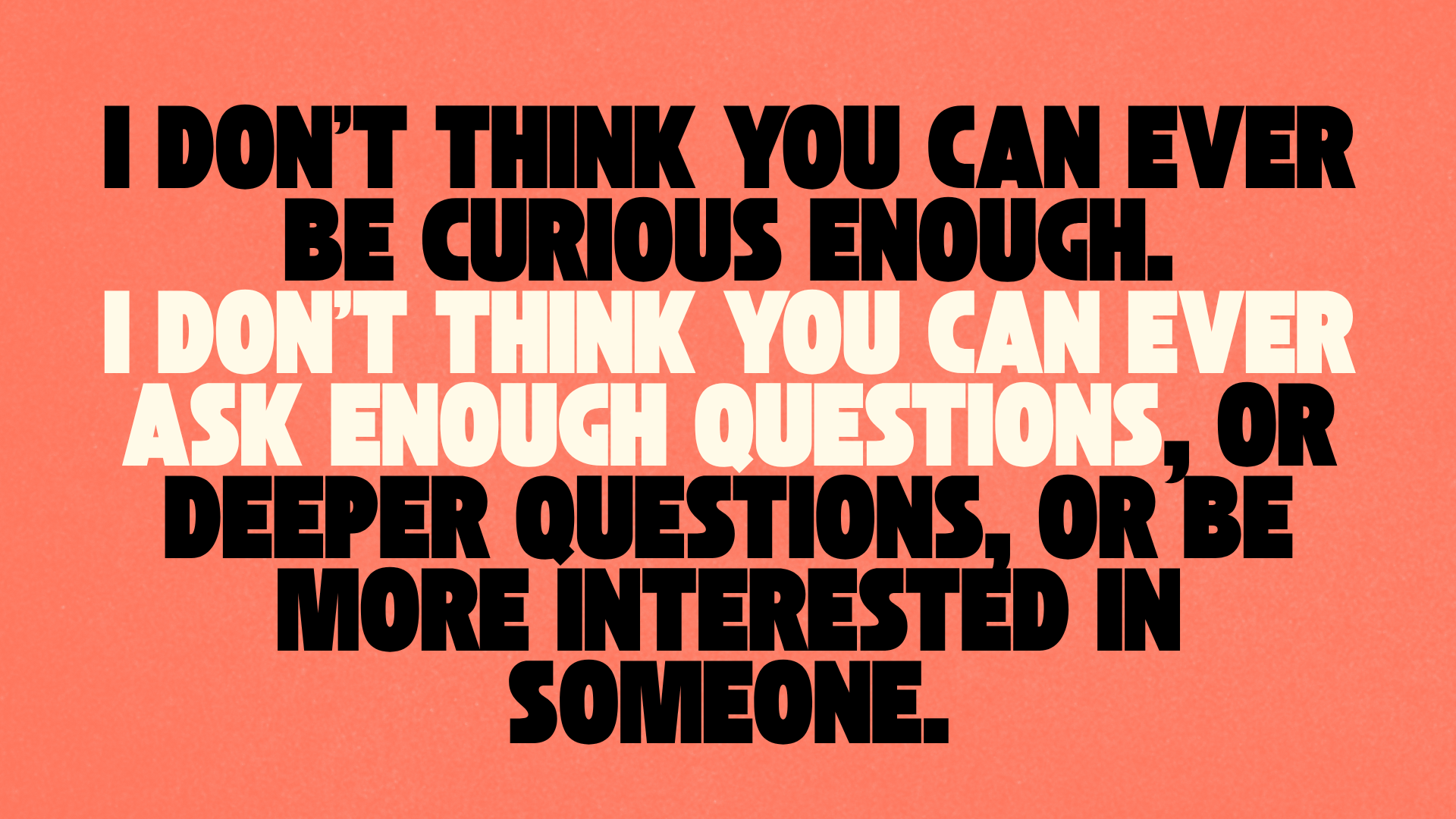
Andy: I don't think you can ever be curious enough.
I don't think you can ever ask enough questions, or deeper questions, or be more interested in someone. And for me, there's a difference for me between curiosity and nosiness. I think nosiness does is a bit like trying to find things out for spurious reasons, whereas curiosity is genuinely compassionate and trying to find out something for the sake of good.
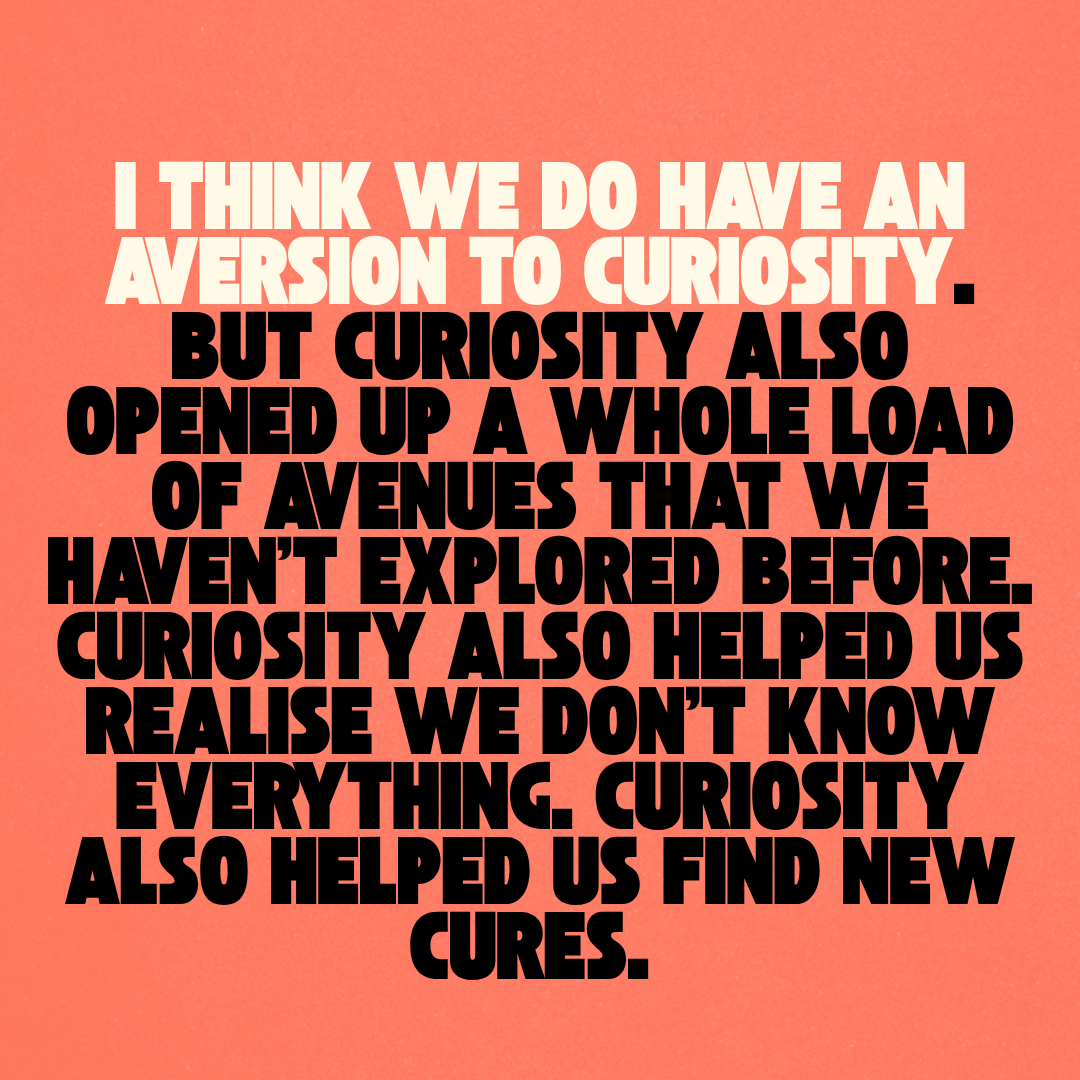
I think we do have an aversion to curiosity.
So I've been thinking about this a lot, right? I think we do label people who are curious sometimes as ‘nosey parkers’ – and we say ‘curiosity killed the cat’.
But curiosity also opened up a whole load of avenues that we haven't explored before. Curiosity also helped us realise we don't know everything. Curiosity also helped us find new cures. Curiosity also helped us realise that - oh gosh, the path to this person's healing is not at all what I'd assumed it would be.
It suspends judgment, and assumption, and stigmatisation, and it makes us so much more compassionate.
For example, the very sad stuff that we saw develop around the death of Martha and the development of Martha's Rule is because people weren't curious enough. I think we when we just assume we know things because we're the ‘experts’, then that's when really awful mistakes happen in the NHS.
Emma: Yeah.
Andy: You look at most of the maternity scandals that have happened, it's because women weren't listened to properly at key moments of their care. Assumptions were made, or people weren't curious enough - so I think we suspend curiosity to our detriment, and it's probably one of the biggest drivers of mistakes and poor care, or poor outcomes.
So curiosity would be for me one of the most fundamental aspects of good care and good healing.
Andy: So I don't think we're anywhere near curious enough, and I don't think we're creative enough either.
We don't give space or time for creativity. We don't value creativity. We think creativity is something a bit ‘unscientific’- and yet there's tons of science around creativity and the need to be creative and the need to hold space for creativity.
The more creative we are - I think especially if we if we combine curiosity with creativity - maybe the more inspirational our ideas will be. And maybe we'll find we'll be able to deliver better care but in more sustainable ways both for the planet and economically.
Emma: And there’s something else that strikes me as interesting when thinking about that about curiosity and creativity when it comes to physical health spaces.
I’ll go back to your point before about getting the community involved – I think one of the reasons that a health centre built today looks exactly the same as a health centre built 25 years ago (a bit of a sweeping statement, but generally that is it's fairly fair to say) is quite probably because nobody was curious.
Nobody REALLY asked what people wanted. Nobody made different connections. Curiosity was lacking, and it didn't lead to creativity - and we now just have these ‘new’ health centre boxes everywhere that look 95% the same as the other, older health centre boxes.
Andy: Yeah,
Emma: So curiosity, even from a purely design perspective, is massively holding back what we could do with health spaces. The other thing that strikes me again is that none of this is about money.
Andy: Totally agree.
Emma: That's the thing that really grinds my gears a lot of the time. So often you can be in a situation where doing the normal thing here that costs £100, and doing something different cost £100. Financially, they're both the same. It just takes a little bit of a little bit of different thinking, doesn’t it?!
Andy: Right. It totally does. And there's so much beauty in creativity.
I mean, honestly, I've been an inpatient a couple of times over the last few years for small operations. I couldn't wait to get out. I didn't feel like it was a very healing environment.
That's no slight on the staff ,or the amazing surgeons, or the people who did great stuff for me - but lying in my bed with tonnes of beeping, and not able to sleep, well it doesn't feel like a healing space.
Now, there's really important stuff that we do around infection prevention and control. We need our healing spaces to be clean spaces. We need our spaces to be practical, and for staff be able to get around and be able to manoeuvre patients without being injured themselves. So, there's stuff that we have to consider in design, right? But that doesn't mean that we have to just have boring, block standardisation.
I think we could be way more creative in terms of how we design hospital spaces - and Alder Hey Hospital is an example of how we can do that and we can do it really well, right?
Emma: Definitely.
Andy: But I also think that community health spaces do not need to look or feel like they do.
They are generally pretty awful. Even when you try and do something a bit fancy - like make it like a shape of a wave, or like a look like a boat or something abstract from the outside - they're still very sterile and boring inside. But they don't need to be.
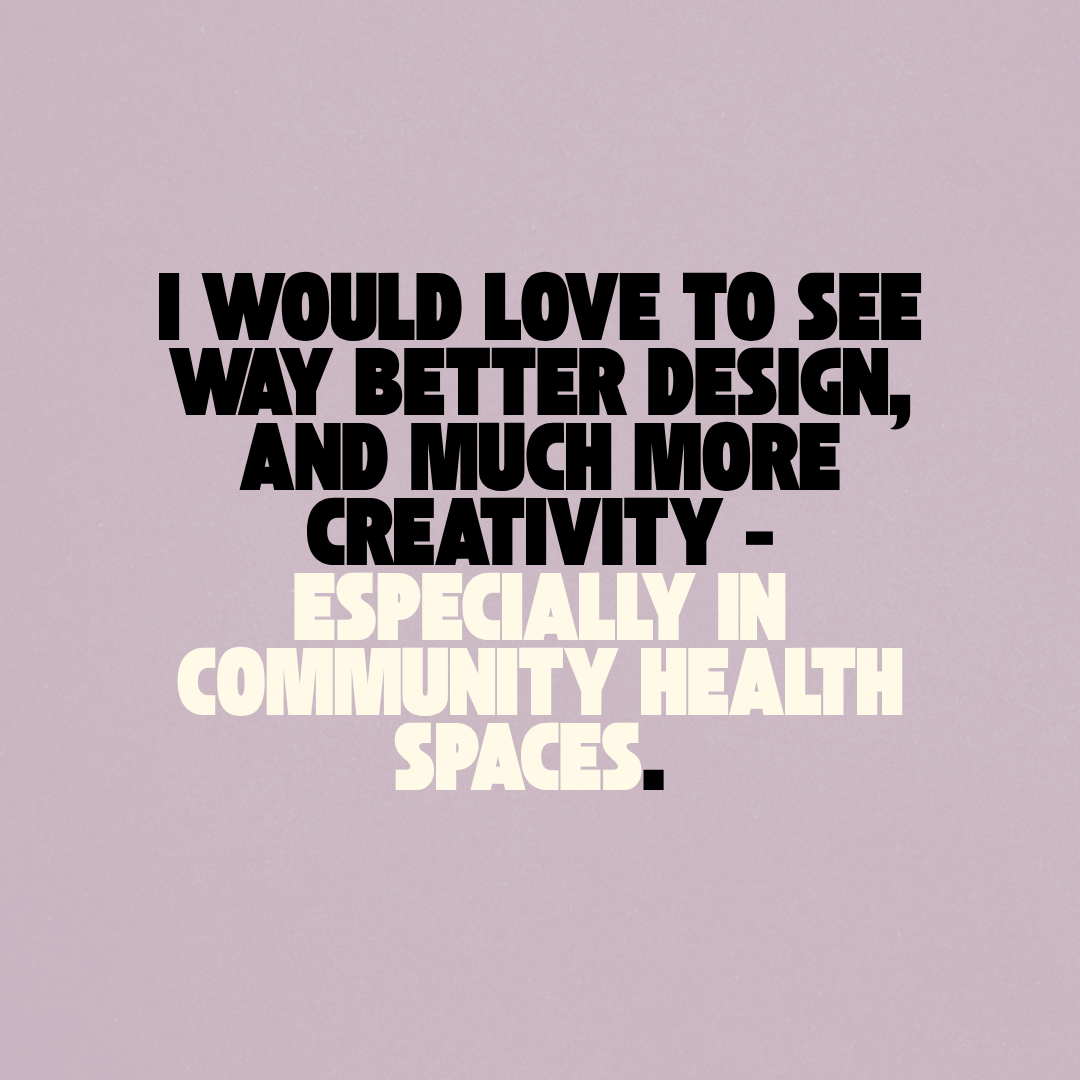
They can be beautiful and welcoming and bring people together differently. I would love to see way better design, and much more creativity - especially in community health spaces. That's why communities should be involved in the creation of those spaces with architects and designers who really know how to work with stuff.
Emma: Yeah.
Andy: One of my favourite programs is Your Home Made Perfect. I would love it if we got some of those designers into NHS community spaces!
Emma: Yeah.
Andy: Your Health Centre Made Perfect. Wow!
Emma: That's a great idea. Oh, I love that.
Andy: Be great TV show that, wouldn't it?
Emma: It would be a brilliant TV show.
Backtracking to Andy’s 3 words
Thanks to Andy here for reminding me - I got carried away and had merrily rolled onto the next question before he’d had chance to answer!
Andy: I didn’t do my three words that describe what I do.
Emma: Oh no – sorry, you’re right!
Andy: So the three words that kind of really anchor me are love, justice, and joy.
Emma: They're three great words.
Andy: They are
Emma: I love the idea of joy being part of what people do.
One of the conversations I've had many times with Ben (Dalton), is about the lack of joy in spaces and why we just why we don't seem to value joy in any kind of NHS environment at all. It's not to say that everything needs to be super happy, but that our spaces should feel joyful and uplifting.
Andy: Absolutely.
Emma: And we should move away from just defaulting to having NHS blues and light blue flooring everywhere - because it just instils fear, anxiety and stress in people. We just feel like we're getting it wrong over and over again.
Andy: I totally agree.
Spaces must be joyful. And interestingly, they need to be joyful for the people who work in them.
Emma: Absolutely.
Andy: So, I do a bit of work with something called the IHI, the Institute for Healthcare Improvement, based out of the States. And there's a beautiful white paper that's been written that showed that the single biggest predictive factor for how excellent a health care system is the number one factor was whether or not it had a culture of joy within the staff. We just don't have that right now in the NHS.
Emma: No, no.
Andy: But [people then ask], what does a culture of joy look like? And actually, it's really well defined. It's really clear about what leadership behaviours are needed, and what team behaviours are needed, and what individual behaviours are needed to build a culture of joy.
But I wonder how much a culture of joy is helped, or hindered, by a space of joy.
Emma: Yes.
Andy: How do we create joyful spaces where it feels joyful to come to work, and we have a culture of joy in which and then we have teams who are full of joy, and how what does that do for the experience of healing?
As I said, global research clearly shows that a culture of joy is the number one biggest predictive factor for the best patient outcomes, for longevity of people staying in their jobs, for most financially sustainable systems - because people have this sense of accountability and responsibility and turning up and wanting to do their best because they're cared for in the environment in which they are caring.
Emma: Yeah.
What would you redesign beyond the consulting rooms of a health centre? How would want people to feel in that space?
Emma: Okay. Final question then.
Imagine you’re handed a bottomless pit of money and total freedom to redesign everything in a health centre outside the consulting rooms.
Where do you start? (I have a suspicion your answer is going to be - go talk to the community). What areas do you think would make the biggest impact? And most importantly, what do you want people to feel when they approach and step inside that space?
Andy: I would always start with deep listening and understanding what matters to the people who use the space.
That is for me the most important thing. I use it in the consultation room with my patients all the time, but I also use it in all of my community conversations. What matters to you?
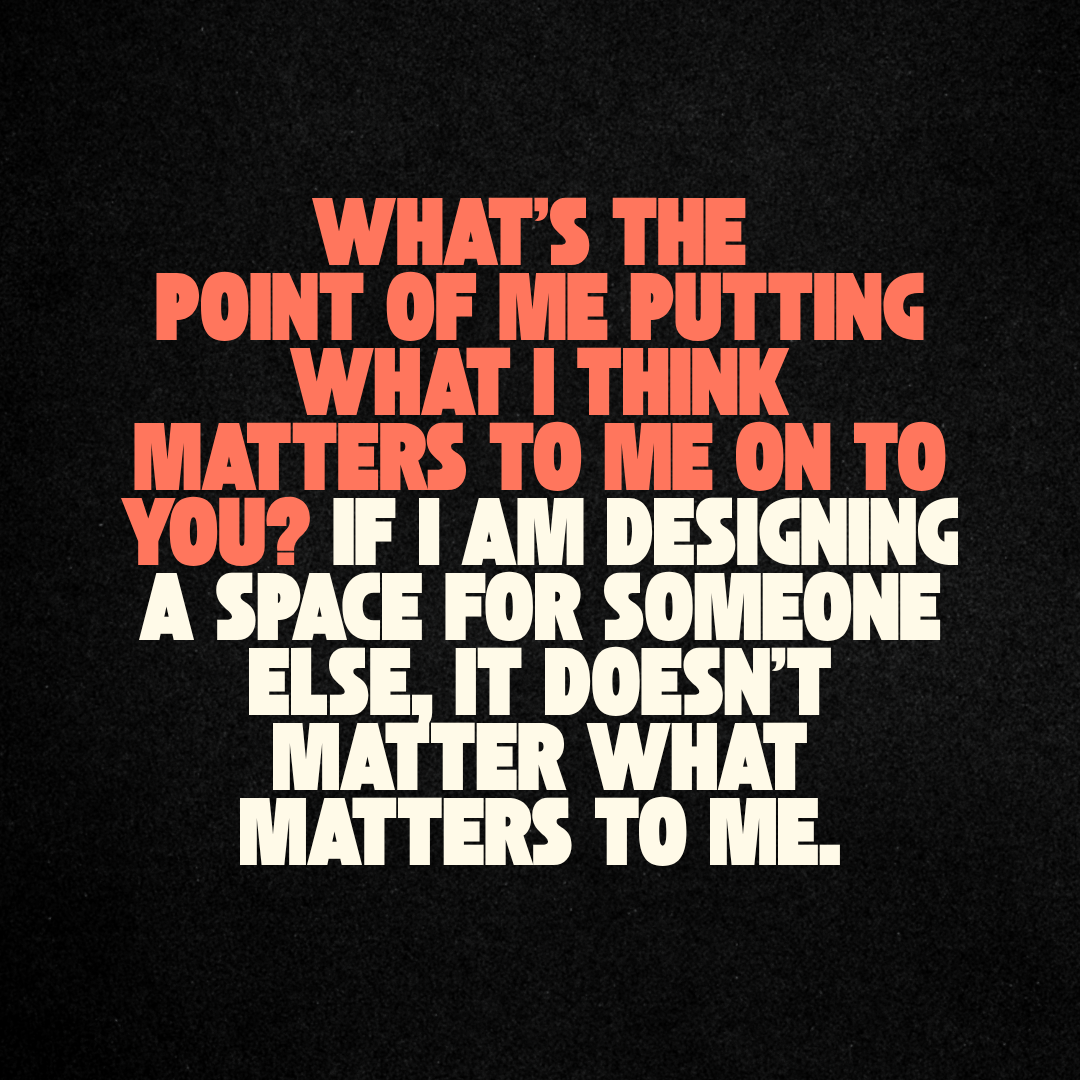
Because what's the point of me putting what I think matters to me on to you? If I am designing a space for someone else, it doesn’t matter what matters to me.
Emma: Yeah.
Andy: So I want to start with that question and then I want to design around that.
Now, using my imagination and thinking about what would matter to me. I would walk up to a building and there would be cherry trees with blossom, and there'd be gorgeous spring bulbs and flowers, and the path would be safe and not slippy, and there'd be playground space, and there'd be exercise stuff, and there'd be music.
One of my favourite things ever is when the Salvation Army band stands outside my surgery at Christmas and plays Christmas carols. I love music, right? I love that that sense of being together around music, so I want there to be music - and music doesn't have to always be happy. It could be beautiful, or sombre,
There'd be spaces for creativity, and exercise, and goodness, and life.
But there's something for me particularly about how you feel welcomed into a building and your first impression when you walk in. I want it to feel spacious, but I also want it to feel not so huge that it's intimidating.
I want it to feel like I belong, and I can see stuff there that makes me feel like I belong, that that I know that I'm okay and safe here. And that there's people I can connect with who are going to welcome me. It would therefore be a place of connection, a place of hospitality, and welcome and provision.
I want it to be a place where there's good nutritious food, there's meal available for anyone who needs one today, and there's space and time to meet and interact with people, and to find ways to connect with stuff that I care about in my community.
Andy: It has to be safe, but it also has to be a place of connectivity and community.
Thank you and goodbyes
Emma: I think that feels like the perfect word to end our conversation on - community.
Andy: Yeah,
Emma: Thank you. You’ve been absolutely brilliant.
Andy: You’re welcome.
Emma: I can't thank you enough for your time – I know you’re a very busy man.
Andy: I loved it. I really love the questions.
They really gave me so much to think about.
Emma: Hope to speak again soon.
Andy: Thanks, Emma – bye.
Emma: Bye.