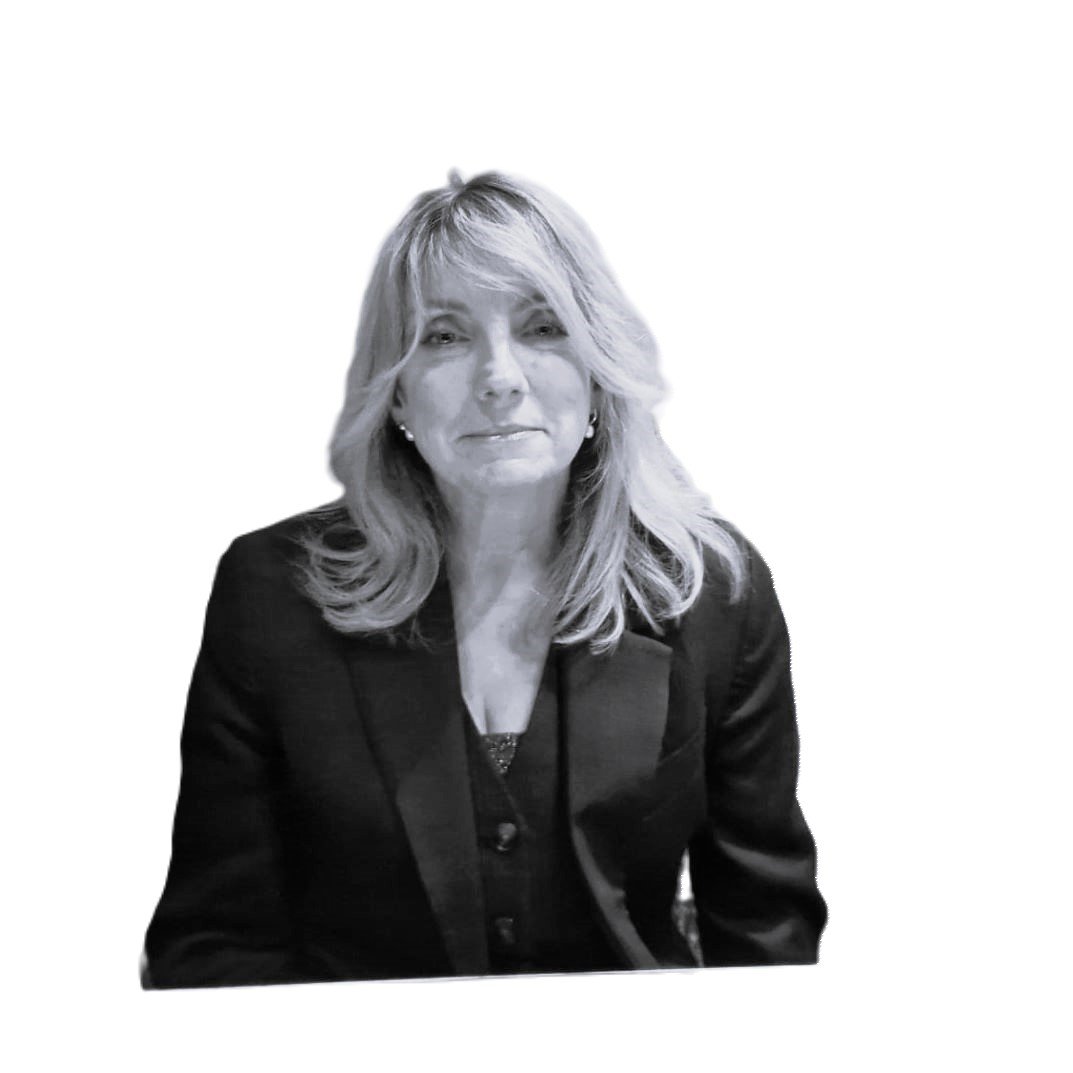
A conversation with Deborah Smith
Business Founder and Co-owner, S&L Planning Consultants
Well, this conversation was not what I was expecting from a planner!
Today I sat down with Deborah Smith, founder and co-owner of S&L Planning Consultants, expecting a conversation about planning and health infrastructure, and that’s what I got – but I also got much more.
So, grab a coffee and hear how McDonald’s, Wetherspoons, and many more high street names have a place in creating health infrastructure, how minimum standards should be abolished, and why Deborah would like to lead the development of a government backed Department for Human Connection and Belonging.
Deborah has a wonderful and uplifting way of looking at things, and as we talk about the built environment through a very human lens, you realise just how much of what surrounds us shapes our physical and mental health. Yes, this conversation is about planning - but probably not quite in the way you expect.
Welcome to the very first Wrong Conversation of our festival.
The longer read
(Grab yourself a coffee…or a drink of your choice)
Not enough time? Find a snapshot of our conversation here
Christine: Hello Deborah, and welcome to the Festival of Wrong Conversation. If you can tell me who you are, and why this conversation matters to you?
Deborah: Hello, I'm Deborah Smith and I’m the co-owner and founder of S&L Planning Consultants. This conversation has mattered to me for a while. Health infrastructure encompasses a lot of different things - not just buildings. But for me it’s also about embracing physical, mental, and emotional health.
The mental health aspect has been of interest to me for more than 20 years now, and then physical health has really come onto my radar since my mom had a stroke last year.
Christine: Oh, I’m very sorry to hear that, Deborah.
Deborah: Yes, that was in November last year. So, she's currently in a wheelchair and can't walk. So, the things we take for granted every day; like breathing, walking, sight, hearing – I’d say, just be grateful each day for your physical health.
Christine: I agree.
Christine: What would you say are the three words that describe what you do?
Deborah: Even though we work in the built environment, we put people at the heart of what we do – so I would say, people, place and create - those are my three words.
Christine: And they are 3 great words.
What does a healthy space mean to you?
Christine: So, moving on to healthy spaces. What does a healthy space mean to you, and have you ever been in one?
Deborah: There is always some element of greenery in a healthy space for me, so the most obvious is going to be outdoors. Trees, mountains and a beach. I've grown up not too far from a beach and have easy access to the coast. So, any outdoor space where there is greenery or water is going to be a healthy space for me.
In terms of what's a healthy indoor space, for me, it’s a feeling. There's an energy to that space. It’s usually got an open window. I need to hear the outdoors. I'm very grateful for the fact that I've got an office next to a park. So, if it's cold, we have the window open, a fraction at least, and I can hear the trees outside. It needs to be light, bright and airy, that’s where you get the feeling of spaciousness and expansion.
Deborah: I've recently worked on a building project at Burnley College called the Industry Hub. They’ve used timber in an imaginative way on the outside of the building, at the entrance, and then through to the staircase and onto the internal spaces. Its airy, lofty and a great choice of materials. It feels like a healthy space when you enter the building.
Christine: I love that answer – healthy spaces create a feeling.
What one thing should we stop doing in order to create a healthier society by 2040?
Christine: If you were going to build a generally healthy society by 2040, what's the one thing you would completely stop doing today? Not reduce, but stop?
Deborah: Okay. So, I'm a planner, and I think some of my clients are going to hate me for saying this, but for me it’s building to minimum standards.
Christine: I agree!
Deborah: I think it stifles creativity. I think that's my issue with it.
In planning, we have lots of rules, regulations, standards and policies, and I think when you have all those things, it can be detrimental to the creativity of the scheme. When I first started planning, we didn't have ‘minimum standards’ and then gradually, they've been brought in. And probably for all the right reasons at the time, but they've become the norm for a lot of developments. It’s become a compliance exercise rather than a creative exercise.
We've got lots of architects that have trained for years, and I do work with some great architects that are incredibly creative, but I feel, in some cases, the homes that we live in are not designed for people to thrive.
Christine: I totally agree.
Deborah: It's almost a survival type of environment rather than an environment that fosters inspiration, aspiration, creativity, and connection. So, yes, I would stop designing to minimum standards and give architects and designers a bit more of a free reign.
I've been in my house for more than 20 years, and we've grown into it, and adapted it. But where developments are built to minimum standards, you lack that kind of flexibility where you can grow and thrive in a space in the long term, then adapt it as you get older, or as your family grows.
Christine: Yes, flexibility is very important.
Deborah: But also, as your parents age they may need to come and live with you. The models that we've got around minimum standards just don't allow for that flexibility.
Christine: So, in your opinion, we should just remove them and build houses that are flexible?
Deborah: Yes. But the language is already there in the National Planning Policy Framework (NPPF). It was reissued last week and includes some of the biggest changes we’ve seen in planning law for decades. So, yes - all the policies are there in the NPPF to create healthy environments, but it's not the driver.
We spend quite a lot of our time in our homes, although I probably sleep more in mine, because I go to work, but our home is an important part of how we feel - it's one of our most basic needs. But it can also be so much more than that. It contributes on many levels to how you feel, how you get up in the morning and how you start your day. But unfortunately, a lot of people don't even have a home - it's such an important foundation for everybody.
Christine: Thank you for reminding me of that.
Deborah: I would also add ‘safety’. Somewhere you can shut out the external noise.
If you could hand a chunk of budget to someone outside of the health system?
Christine: Moving on, and I’m interested to hear what you have to say about this - If you could hand a chunk of budget to someone completely outside of the health system to do something with a space, who would you hand it to and what would you want them to do with it?
Deborah: This is a really interesting question because it's such a big one, and there are so many options. We get used to giving money to certain organisations, so turning this on its head and saying ‘who are we going to give money to’ is a great question.
I don't think there's enough third sector spaces out there for people to connect. Connect in a normal natural way that doesn't feel like ‘I’ve got a problem and this is the place I'll go to’. So, for example, ‘I'm lonely so I'll go and find a day centre’, or ‘I’ll go to the GP and they will give me a social prescription or direct me to a group’.
A lot of these connection spaces are invisible, and I think that’s part of the problem, which leads people to think - I have a problem and I need to go and find somebody that's going to tell me where the solution is, because you can't see it for yourself in society. So, I think we've got a lack of easily accessible visible third spaces.
I'm not saying this is the solution, but what if we didn’t give money, but asked organisations that create billions of pounds, to create third spaces. Say, McDonald's or Starbucks, which are some of the most instantly recognisable brands in the world, or even cinemas or department stores. You could go to these places, connect with people, feel normal, they are accessible, and you didn’t feel like you had an issue going to those places.
Christine: I'd never really thought about it like that, but you're right. I recently visited Spain and saw that McDonald's had developed a gym attached to their store.
Deborah: That’s a great idea.
Christine: I've recently read a paper published by Mary Portas and she talks a lot about this concept. Not exactly, third spaces, but brands should look to evolve from ‘how can we sell you stuff’ to ‘how can we create an experience or a connection for you’. High streets, department stores – they are all facing real challenges. Why can’t one floor of a department store be a park?
When I read the paper, I was considering it from a health perspective, and was thinking - what if you could take health into a department store and normalise it through prevention and wellbeing, rather than something that is done to you?
Deborah: When I was thinking about this, I thought about when my children were small, at primary school. There was a McDonald's not far away, so sometimes after school, say on a Friday, a few parents would take their children to McDonald’s, as they had an indoor play space and a big table in the middle with pens, colouring things and we would all sit together, and the kids could play. It wasn’t a huge space, but it was definitely a community space. It was a recognisable brand, and it was a community space where you could sit - for an hour or two .
I also took my parents to Wetherspoons the other week. It was about 11:00 in the morning and they had a breakfast. I was sat there and looked around. And I thought - this is like a day centre. They offer tea and coffee, free refills, and the prices are not expensive compared to lots of places. They don't play music, and I don't think they want people on laptops. I couldn't believe how busy it was. It was in the middle of the week in the morning, and it felt like a community space. It really made me think ‘I can see they've got something here with this. They're doing something right’.
There was a group of four guys, that were around 75 plus sat around a table having breakfast and a cup of tea. Where would they have been otherwise?
Christine: Probably stuck at home by themselves.
Deborah: Exactly. And there's so many people that are trapped at home, by themselves. People with disabilities, carers, children that have been excluded from school because they feel like it's not an environment for them. All lonely at home, and without these visible spaces - they don't know where to turn. I definitely think brands could step up and create these third spaces. Somewhere for human connection. Preventative spaces.
Christine: Great, thank you.
What words should we ban from the planning dictionary?
Christine: The world of built infrastructure is designed around a specific type of language, which is often only known to the people that work in the industry, what words or phrases should we immediately ban from the property planning and corporate dictionary? And what should we say or use instead.
Deborah: Now, I'm not coming with a tonne of solutions when I identify these two things - but I've had a bug bear about the word ‘unit’ for a long time. So, in planning, we use the word unit. This is a 300 unit scheme, and we're referring to homes. It's somebody's home -it's not a unit, which is a box or a quantity of something. I don't really like that.
Christine: So, what should we say instead of unit?
Deborah: What it is! You're essentially creating a home for somebody. It's so much more than its physical entity - I'd get rid of the word unit, and say what it is - a home.
And more recently I've come across the term ‘service users’ through being involved more in the health world through my mum, and my sister, who works for a local authority with older people who need mental health support. So, service users. I'm not too keen on that. I think we should stop using that one because they're people. I call my customers, clients. So, I think we should stop using the word service user.
If you start to use a different language that's more people focused, it becomes more about outcomes and less about compliance.
I'm not naïve by any means, and I know that viability is an important piece of the jigsaw. People should make a profit, that’s how business works - otherwise nothing would get delivered. But the way we refer to the people that use services, or the people that live in the houses - we take the human out of it, don't we, if we say units and service users?
Christine: They're both really good examples that will make me think in the future.
What radical move could the planning system take?
Christine: Going on to your specific sphere of expertise.
Both nationally and regionally, planning legislation often dictates what can be delivered in an area. Thinking about this, what's the one thing that the national planning system could do that would radically change how we develop infrastructure on both a micro and a macro level?
Deborah: Ok. I don’t know whether this is Government driven really, and it almost sounds a bit 'Hogwarts in a way, but I’d like to create a Department for Human Connection and Belonging. It doesn’t sit with the NHS, but it’s a people focused department or organisation.
Christine: And what would you see this department or organisation doing?
Deborah: They would focus on connection - supporting people to thrive. They would make human connection an opportunity, making it more visible, in areas such as developments. Linked to our previous conversation about outcomes rather than compliance, they could look at ways in which people in neighbourhoods can walk to places, have access to green spaces, and playgrounds for children. They would have oversight across different departments, not just housing and local government community departments, but across the NHS as well.
Thinking about prevention and the need to access health services, so people don’t end up in crisis, because the department of human connection and belonging focuses on prevention. This is about positive psychology rather than illness - What do I need to be well? I know, it's not that sexy, because it can be hard to measure, and people don't make money. You never know about the person who didn't end up in A&E or the person who didn't develop, a long-term illness. It's hard, and no one's going to profit off the person that didn't end up having a long-term illness.
Christine: We could go down a real deep rabbit hole here in terms of ‘what is the function of Government’? Surely it’s to holistically take care of its citizens? So even if there isn't a saving or a measurement, surely, it's a duty that we all have to each other?
Deborah: Yes.
I mean, how incredible would we be as a society if every one of us were given an opportunity to thrive, or grab an opportunity to thrive? I don't think it's something that is given to you - there's a massive personal responsibility piece. In order for somebody to feel like they're in a position where they can thrive, there's a multitude of things that must fall into place. It’s like a house of cards - take one thing away and everything crumbles. But some people are more resilient than others, aren't they? But it's interesting.
I work with a company called It's Mental, and they have a stay well strategy which is a positive prevention strategy rather than - I have a mental health problem, I need help. It's such a massive difference to say - how do you stay well? Because then you are not saying I have a problem, you are just recognising that anyone can stay well, and that resonates with people.
Christine: Also, when you see the younger generations and the challenges that they're facing. If you look through that lens, and project forward, you think ‘if we do not help these young people build resilience, goodness knows what their life is going to be like’.
Deborah: Yes. And none of this gets taught in school, does it?
There's a big education piece - we’re quite good at helping people become very good at maths, English, science and academic subjects. But there's a real gap around questions like - What is it to be a human being? What does it look like to reach your full potential? What is it to recognise that you're unique and you've got something to offer? (then helping them find it).
Christine: Okay. So, a key take-away - we'll start lobbying government to set up a Department for Human Connection and Belonging.
Deborah: I might put myself forwards - Minster for Human Connection and Belonging.
Christine: Fantastic – you’ll get my vote.
Where does planning policy help and hinder?
Christine: Okay. Moving on.
Thinking about your time as a planner, and based on your own individual experiences, can you give an example where planning policy has enabled health or healthy infrastructure to be developed in a radical or different way, or where it's hindered the development of a game changing project? And if you can, was that planning mechanism a national or local policy?
Deborah: So, it’s quite a long question, and a short answer.
Planning is about regulations, rules and compliance, and there's a little bit of flexibility, I guess, but planners are very much led by the planning process. And that’s the way it should be. It's a planning policy driven process. The development plan comes first, unless material considerations indicate otherwise, and you might reach a different outcome, or different decision, but I think local authorities can get a bit scared about things that look a bit different, that are outside the norm, so unfortunately, I haven't got an example where planning has created something radical.
Sometimes I think the people that have got the radical ideas have really needed to bring the local authority on a journey. And sometimes that's a very, very long journey, so you need sticking power and you need deep pockets to do that. Viability, as you know, will kill a lot of schemes, so it's difficult to do something that's outside the box.
Christine: Okay. So, if we've not got examples, does creativity tend to come more from the developers, that either working individually or in partnership with local authority or local business, or where do you see the drivers?
Deborah: In the Vision. So, you tend to find it's outside of the local authority. People will come with the Vision, because a local authority is usually the determining body. It tends not to be a very collaborative process.
Often, there’s central government funding for certain projects, and local authorities will bid for that funding. And that project becomes a collaborative process between, a local authority, a developer, and an end operator perhaps. But development doesn't normally work in that collaborative way, especially not on a bigger scale. You need some deep pockets to really do something different.
Christine: Okay. That's one of the challenges we need to try and overcome, isn't it? How do you create innovation, or how do you bring about transformation and change in a system?
Deborah: Yeah. I also think there's a lot of suspicion between parties – the big, bad developers, the local authority that always says no. They’re embedded in what we do to be honest.
But imagine, if we could properly collaborate and find solutions, and there were resources to do that. We could create really good communities with the health infrastructure that's needed, from the outset - embedded in the everyday. This is what I meant earlier about homes and minimum standards.
A house is health infrastructure. A park is health infrastructure. There are so many things that are actually health infrastructure.
Before you even start to look at, ‘do we need a GP surgery on this site, or do we need an extension to the hospital that’s nearby? – the obvious health infrastructure. There’re so many things that contribute to health before you even get to a position of actually being signposted to needing medical health support.
Christine : And I think in that one sentence, you've just crystallised why we wanted to do The Festival. You've highlighted the fact that there are so many markers that surround our lives that contribute to our health before we actually need to access what we all naturally determine as health.
Deborah: Yes. Definitely.
And we talk about that in planning as well. We'll talk about creating communities where people don't have to drive everywhere. That's health infrastructure, isn't it?
Pollution. The air that you breathe. Being able to let your kids out safely to play in the park down the road knowing they're going to be all right. That’s health infrastructure. It’s part of their psychological and emotional growth. The development of resilience. Climbing a tree, falling out, meeting friends, falling out, going back the next day. These are all the little things that create you, that form part of who you are, and make you a healthy, thriving individual.
Christine: Fantastic.
Goodbyes and thank you
Christine: And on that note, I’ll conclude but thank you very much for contributing your wise knowledge to the Festival of Wrong Conversations.
Deborah: Thanks for asking me.
Christine: Thank you.