Someone asked me this last week: ‘So, what actually is a wrong conversation’?
I ummed and ahhed, but then said it’s the conversation about health infrastructure that has nothing to do with NHS estates as we know it. It’s the one at the edges - sitting in the grey, fuzzy area at the end of our usual vision.
Looking back at everything we’ve explored so far across this festival, it can probably be distilled into something even simpler than that. The wrong conversation is about the infrastructure that creates health, but that doesn’t fit neatly inside a traditional estates agenda.
Things like nature. Like beauty. Human connection. Stories. The spaces between buildings. The places beyond hospital walls…
And I strongly believe that because they’re harder to measure, they get treated as non-essential. A nice-to-have. A distraction.
I think that's a mistake.
Firstly, in praise of the ‘right’ conversation
Let’s start with the traditionally accepted ‘right’ conversation about health infrastructure. The one we are familiar with in NHS estates.
Because it deserves appreciation. A lot more than it (usually) gets.
It’s the business case. The programme board. The risk register. The prioritisation of limited funds. The masterplan. The spreadsheets.
It’s the relationships with service leads around service moves and redesigns. Contractor management. Hospital design. The SDPs. The space efficiency and improvement programmes.
It’s keeping the lights on when budgets keep getting slashed. It’s estates planning. It’s the people managing safety, standards and public money in a system under enormous pressure.
It's the accepted language, structures and processes of NHS estates.
And it is all essential.
It is certainly not the easy conversation - it’s a really hard one.
But it’s only one lane.
And we need more than one lane.
The other lane
Running right alongside all of this is the ‘wrong’ conversation.
That’s the one that feels off-agenda. Cross-disciplinary. Messy. The one that requires a different kind of thinking, new connections and relationships that might not ordinarily happen.
It forms the basis of the conversation that underpins left-shift - asking the NHS to look way beyond its own boundaries and strategically connect with infrastructure, people and places far beyond its own red lines.
And, given the pressures that the right conversation brings to the world of estates, it can feel unnecessary.
It can also be a little uncomfortable.
Why? It requires an openness to a blurring of responsibilities, roles, and control.
It requires some time and space to think differently. And it requires moving away from the traditional structures that define the world of NHS estates and away from using the Five Case Model as the starting point.
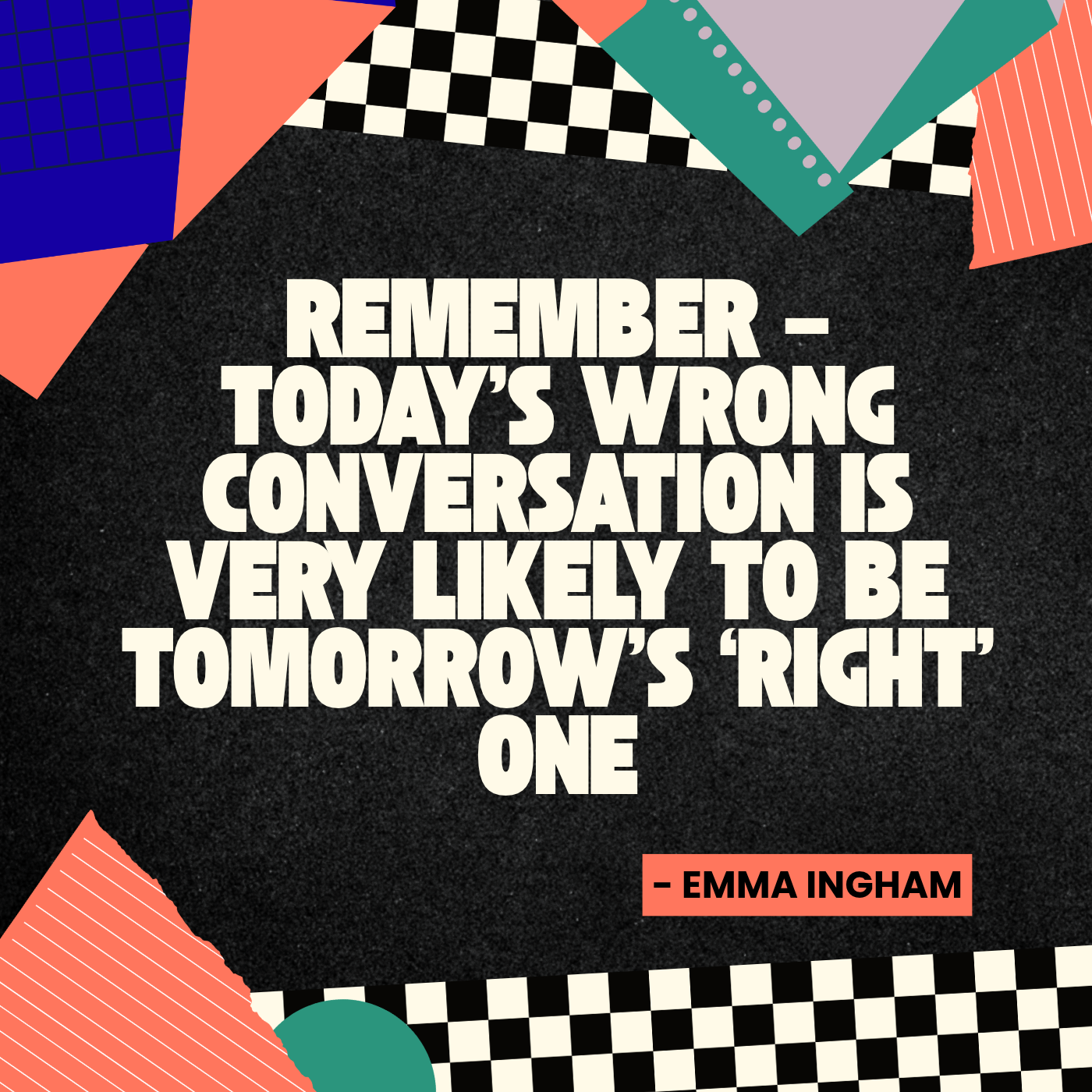
The wrong conversation asks questions like:
What story are our buildings telling people?
What if we’re solving the wrong problem?
Why on earth do we build it like this?
Are we creating this for health, or illness?
How can we look beneath, and around, and between, the bricks and mortar - and see the things that usually go unseen?
And so much more…
It asks What do YOU think? of people who have never written an NHS business case in their life.
It invites different perspectives. It creates unexpected connections. It makes room for ideas that might never emerge from the usual processes.
This conversation is just as necessary, and just as hard.
Of course, not everything can be a great idea. Some ideas won’t survive contact with reality. Some will be parked. Some need money that is just not there. That’s all fine.
Not everything from these wrong conversations will be a win. Some ideas are the seeds of the future. Others really can make a difference today.
Two lanes, same destination
Both lanes have the same destination - better health. And we need both of them.
The right conversation gives the wrong one something solid to push against – to test ideas against. To ground imagination in.
And the wrong conversation gives the right one somewhere new to go.
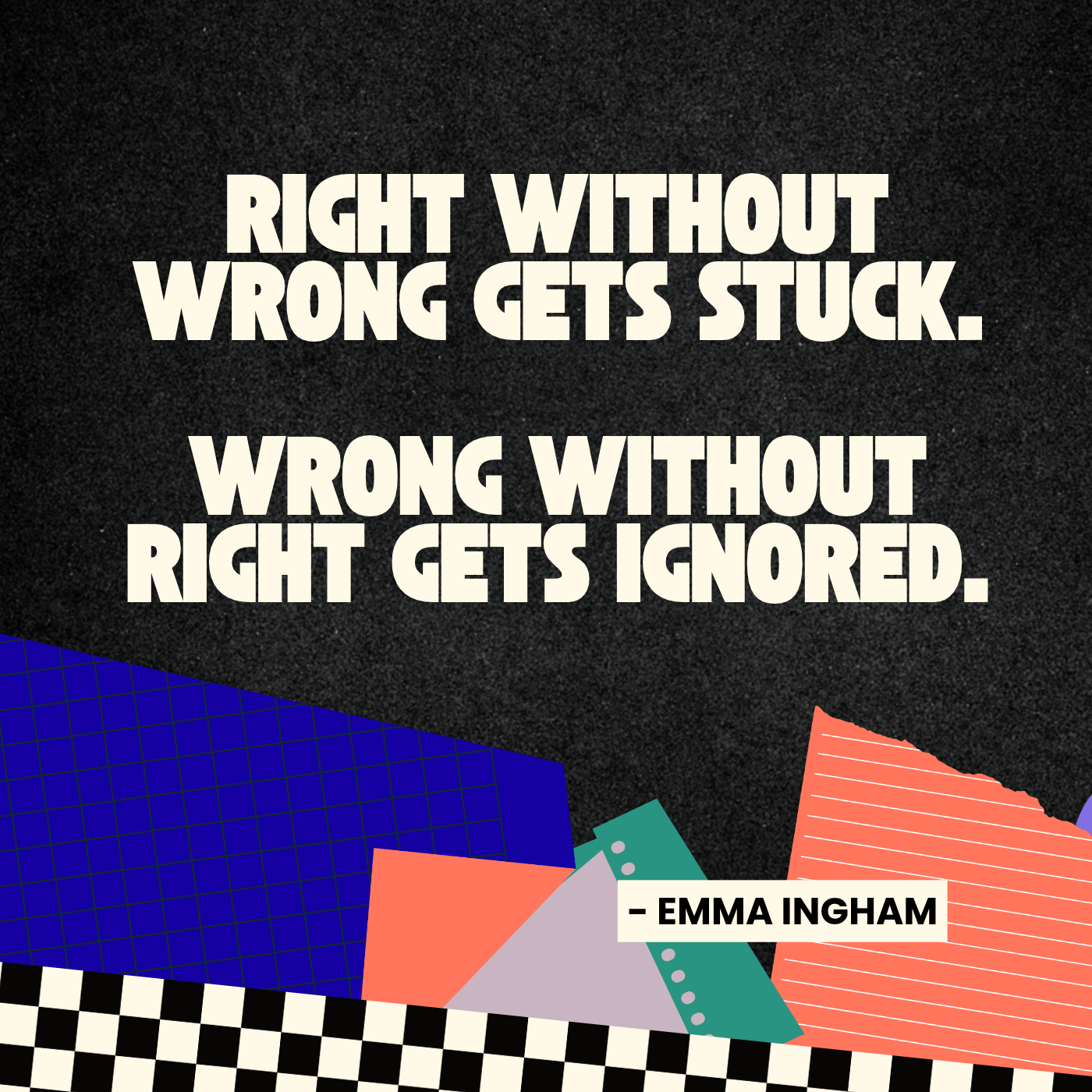
Right without wrong gets stuck. Wrong without right gets ignored.
Together? In my view – that is how things change.
Hard, uncomfortable and full of hope
The wrong conversation is hard work.
It's unfamiliar. It asks people to step outside the boundaries of what they know, and sometimes what they feel responsible for.
But it’s also so exciting, and full of hope. This festival is proving that to me, more than ever before.
It’s the place where we start to see small paths to something better - routes nobody had on the plan, or in a strategy anywhere - that quickly become the ones everyone wants to follow.
Perhaps the problem isn't that these ideas don't fit the estates agenda. Perhaps the agenda is too small for what health really needs.
Get both lanes talking at once, and together, and the potential is massive. More ideas given a chance. More small steps that add up to something big. More opportunities to experiment and progress. And ultimately, more potential to create better infrastructure for health – in all its nuanced definitions.
That’s what we want to see.
So thank you for being part of this festival.